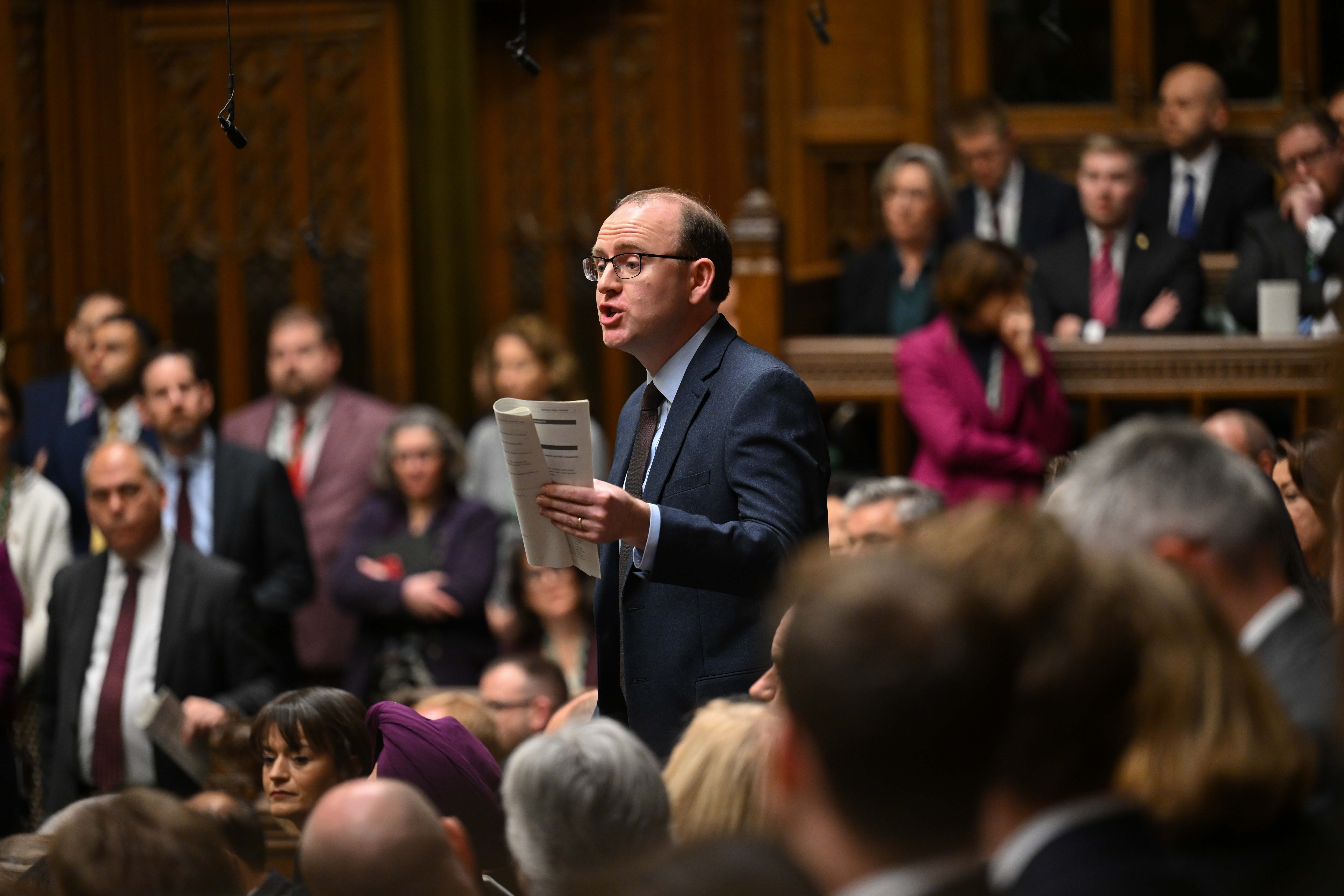

Countries with direct experience of Russian aggression are the most clear-eyed about the Russian threat, a local MP has said — and that threat includes the USA.
Macclesfield MP Tim Roca, whose constituency reaches to the edge of Congleton and includes villages including Eaton and Gawsworth, speaking in a debate on the war in Ukraine on four December, said it had become “painfully clear” that many people underestimated the “sophistication and intent behind the Trump Administration’s manoeuvres regarding Ukraine, Europe and Russia.”
“What at first seemed like a genuine pivot towards supporting Ukraine now appears, in retrospect, to have been a carefully orchestrated performance designed to protect Russian assets, pave the way for future business dealings and shape a narrative in which Ukraine’s defeat was treated as inevitable,” he said.
“At the heart of that strategy lies the $300 billion in frozen Russian sovereign assets that MPs have mentioned repeatedly this afternoon. For many years, we have debated whether those assets should be used to help Ukraine defend itself and rebuild. But we now know from reports that US officials have been placing intense pressure on European governments to leave those assets untouched, and indeed insisting they be returned to Russia after any peace deal — while feigning, for months, a willingness to ramp up support for Ukraine.”
He said it was the Baltic countries — Poland, Finland, and others with direct experience of Russian aggression — that were “most clear-eyed” about the Russian threat.
“We do not want a wishy-washy peace that does not deliver genuine security. There has to be genuine security as the basis of any peace,” he said.
He went on: “We are building a coalition of the willing, and in any peace agreement we may potentially be asked to agree to put British troops on the ground and contribute to maintaining ceasefire lines or to deter Russian aggression.
“We have to be honest about where the British public is at, and I am not convinced that the British public is yet psychologically in the place it needs to be for that commitment.
“We all have a duty to contribute to the understanding of the threat that Russia poses to our security. We must speak honestly with the country about the risks we face, the commitments we may be asked to make, and the moral and strategic imperative of ensuring that Russian aggression does not succeed.
“If Ukraine falls or is coerced into a settlement that gives the Kremlin what it could not win on the battlefield, Europe will not be safer.”
He warned that Ukrainian resilience was not infinite.
“Its morale depends on knowing that the world has not forgotten it. Every air defence system, shell, economic sanction on Russia and measure to support Ukraine and its statehood matters — not just materially but psychologically.
“Every equivocation, delay and wavering signal emboldens Putin and his gang of thugs. We are clear that Ukraine is fighting not only for its freedom but for the principle that aggression should not be rewarded. I believe that Members of this House agree with those principles. Therefore, we must act with urgency, clarity and resolve.”
Mr Roca said that Trump had always accepted the “Russian narrative of inevitable Ukrainian defeat,” and once the pretence ended, US officials “made their message clear to the Ukrainians: accept a deal now or face a worse one later”.
Diplomacy
He added: “Russia can fight indefinitely; Ukraine cannot. This is not diplomacy; it is coercive pressure on Ukraine, and it carries an unmistakable message that the United States administration is now structuring its policy around the assumption of a Russian victory in the long term.
“Many of us will be incredibly worried that Trump will pressure Ukraine into giving up territory and ultimately fail to give any meaningful security guarantees. It is for Ukrainians, who have paid a price in blood, to decide for themselves what price they are prepared to pay for peace.” He said Europe and Britain must “accept the truth” that if Ukraine is to resist “Russian maximalist aims,” they must step up now, not in six months or two years.
“We must recognise that 2026 will likely be the decisive year in this war. Yes, Russia faces mounting economic difficulties, fuel shortages and internal discontent, and the Kremlin still insists on its war aims. But its capacity to sustain the war is not limitless, and a sense of futility in Moscow is a necessary condition for peace. Ukraine’s ability to hold the line, supported through European unity, is central to bringing that moment closer.”
He warned again that Ukrainian resilience was not endless.
“There are hundreds of thousands of cases of desertion — a stark measure of exhaustion and eroding morale among frontline soldiers.
“Many units are under-strength and increasingly reliant on poorly trained conscripts rather than experienced volunteers. Some brigades operate without adequate rest, rotation or munitions.
“Commanders describe troops who are physically depleted, mentally exhausted and losing confidence in the strategic direction of the war. The result is a brittle front, with units stretched to breaking point, lacking resilience and vulnerable to sudden local collapses.
“Without substantial support, I really worry that the Ukrainian military could face a cascading breakdown as Russia continues to pile on the pressure.”
He said the strain on Ukraine’s civilian population was equally acute.
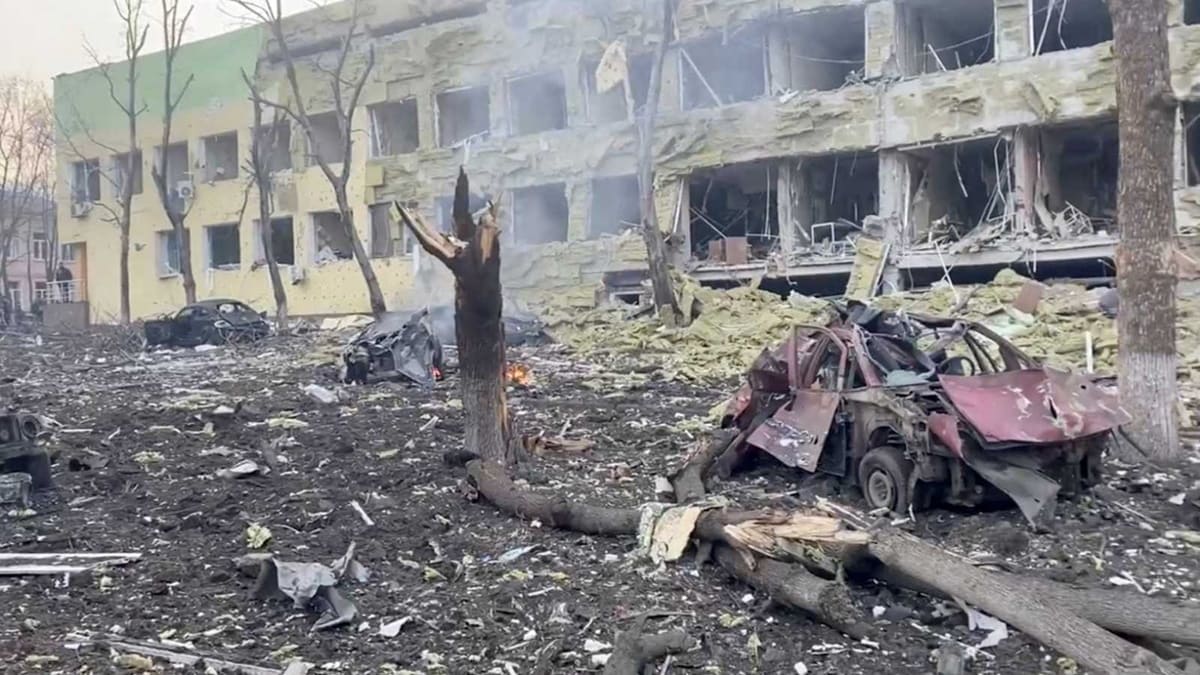
“After three years of missile and drone attacks, millions of Ukrainians endure repeated power outages, damaged infrastructure, deep psychological trauma and limited access to heating, electricity and clean water.
“Mental health support has deteriorated sharply, especially as winter approaches. Displaced families have exhausted their savings, livelihoods have vanished, and the cumulative stress of air raids, mourning for the dead and uncertainty has driven a marked rise in depression, anxiety and long-term trauma. Communities live in a cycle of destruction and partial recovery, eroding resilience with each passing month.”
He concluded: “We should be clear-eyed about our own position. We had warning after warning, but we never did enough — the invasion of Georgia in 2008, the annexation of Crimea in 2014, and the full-scale invasion several years ago — yet still we did not ramp up defence spending.
“The British armed forces have experienced years of hollowing out, cuts to troop numbers and chronic under-investment. Only now are we finally beginning to reverse some of that decline, but can we honestly say that the pace is adequate to the threat we face?”
(Photo: armyinform.com.ua).