
Plans for a small housing development in Astbury have attracted some strongly worded letters of opposition.
Caroline Rebholz has applied for planning permission in principle for a minimum of two and a maximum of four dwellings on land off Newcastle Road, Astbury.
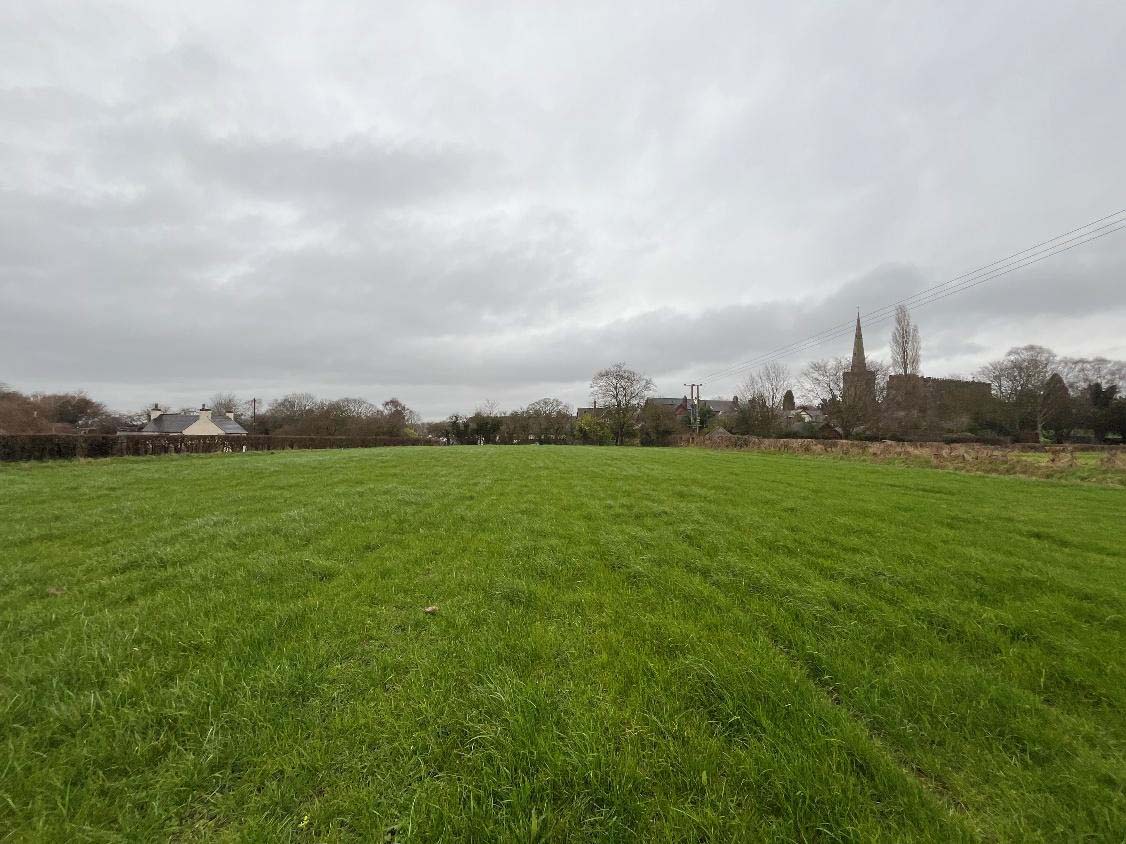
The site, next to Astbury Garage, is an open field and is located at what objectors describe as an accident blackspot. It is also on the edge of the village conservation area, with all of those issues raised in objections to the application.
The resident of Smithy Cottage asked Cheshire East Council to refuse permission unless it was satisfied that the location and proposed amount of housing were acceptable in principle, taking account of the site’s Green Belt status, heritage setting and the practical implications of access from Newcastle Road.
On the Green Belt issue, the objector said the applicant acknowledged that the site was in the Green Belt and outside Astbury’s defined infill village boundary, but said it formed part of a larger open agricultural field rather than a small gap within the village.
The objector said the application stated that any harm to the conservation area could be mitigated by later decisions about density, height, scale, massing, materials and landscaping.
The letter stated: “As permission is now sought for up to four dwellings, I ask the council and its conservation officer to consider whether that maximum is supportable in principle before the form and siting of the houses are known.
“The public benefits of the proposal should be weighed against any identified heritage harm.” The letter also said that no access position, visibility splays or pedestrian arrangements were shown on the submitted plan.
“I ask the council’s highways team to consider whether safe and suitable access for the proposed amount of development is realistically achievable from Newcastle Road, including the visibility required at any junction.” A letter from Black and White Cottage said the tower and spire of St Mary’s Church were “the outstanding feature” of the rural landscape to the south of Congleton along the A34 corridor, and that the development would be “significantly harmful” to the setting of the village and, in particular, the tower and spire of the church.
A resident of Pinfold House said access was “non-existent” and that any proposal would be on a section of road “proven to be accident-ridden (at least one of which has been fatal, within feet of the proposed development)” and either just before or just after the brow of a hill where the speed limit is under review.
“On that basis alone, it would be irresponsible of the council to allow,” the letter said.
Newbold Astbury and Moreton-cum-Alcumlow Parish Council, which asked for an extension to the consultation period, also objected. It said the proposal was “inappropriate development” in the Green Belt, would be out of keeping with the area’s architectural heritage and that there was “no demonstrable need” for the houses given other applications in Astbury and neighbouring Somerford.
The parish council added: “Vehicle access, and increased traffic on the A34, will increase the risk of road traffic incidents. This precise area is already an accident blackspot. Unless and until additional safety measures are introduced, such development cannot be supported.” A letter from Greenbank said the “greatest concern” was the proposed access onto the main road just beyond the village.
“This section of road is already a known area of concern with regard to vehicle speeds and road safety. There have been accidents in the vicinity, including a tragic collision which resulted in the death of a young driver.
“Vehicles frequently accelerate as they leave the village and approach the main road. The proposed access would therefore introduce an additional point of conflict onto an already problematic stretch of road,” the letter said.
“We therefore have very real concerns that introducing another residential access onto this stretch of road could increase the risk to residents, pedestrians and other road users.” However, a resident of Orchard House, on School Lane, wrote in support, saying the site was an “appropriate location for small-scale residential development”, could be built without harm to the significance or setting of the Astbury Conservation Area or nearby listed buildings, and that Cheshire East could not demonstrate a five-year housing land supply.
The applicant said that Cheshire East had identified Astbury as an infill village through the adopted development plan.
“The identification of the village in this way is an acknowledgment that the site represents a sustainable location for some limited development. The application site is directly adjacent to the infill village boundary and can be considered grey belt land where development is also acceptable in principle,” the application said.
The plan reference is 26/3260/PIP and the application is for permission in principle. The consultation period has ended and a delegated decision is due.