

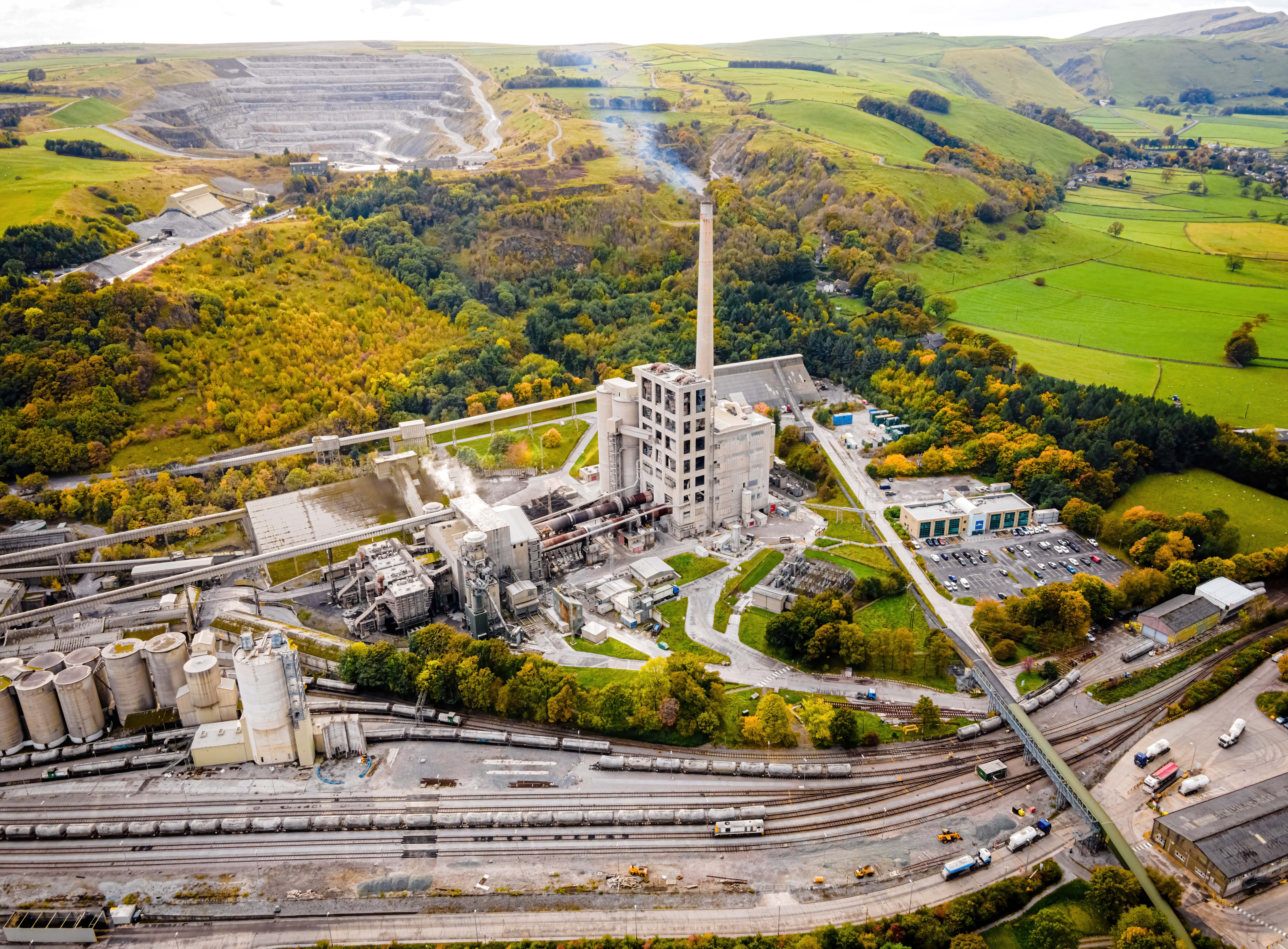
The outskirts of Biddulph are included in plans for a controversial 200km carbon dioxide pipeline stretching from Staffordshire to the sea.
The “Chronicle” first reported on the project in 2024 when all that was known was the pipeline would go from cement and lime plants in Derbyshire and Staffordshire and between Macclesfield and Stoke-on-Trent, out to Morecambe Bay in the Irish Sea.
At that time there was no indication about how close to Biddulph it would be.
Now, proposals for the Peak Cluster decarbonisation project have been posted online as part of a public consultation, and the suggested route passes alongside Rudyard Lake, going through Newtown and then close to Biddulph Park before dropping down through Timbersbrook.
Some 40% of the UK’s lime and cement is produced in Derbyshire and Staffordshire, with the process releasing large amounts of CO2 into the atmosphere.
The Peak Cluster project, which would be the largest of its kind in the world, would aim to pipe the emissions under the seabed, where it would be permanently stored.
An interactive map on the consultation website gives a clearer indication of a proposed route for the pipeline.
It would start from cement manufacturer Holcim’s plant at Cauldon in Staffordshire before bypassing Leek and going between Rudyard Lake and Ryecroft Gate.
It would then continue across Dingle Lane on its way to Newtown. On the map, the pipeline, which then appears to be in the shadow of Biddulph Park, crosses Overton Road and heads towards Dial Lane, Timbersbrook and Key Green and continues to a “central feeder” near Gawsworth before travelling across Cheshire on its way to the coast.
Biddulph West Coun Nigel Yates, Cabinet member for climate change and the environment at Staffordshire Moorlands District Council, said: “The district council has been engaged with this process from the start.
“As far as we’re concerned it’s a very laudable scheme and as much as there will be short-term and in some cases a little bit of medium-term disruption, overall it’s a very positive scheme.
“Not only does it resolve the carbon emissions issue for one of the biggest polluters in Staffordshire and Derbyshire, it will also have a dramatic impact on removing air pollution, so it’s a win-win from the climate point of view.”
He believed the pipeline would have little impact on residents living nearby or the surrounding environment: “The mapping they have done gives in general a 300-metre corridor to choose from but it doesn’t mean it’s going to be a 300-metre pipeline. It will be much, much smaller and thinner.
“As much as you can understand people’s fears, when you consider the damage with sewage pipes, surface drainage pipes and supply pipes, it fits in with the national transmission sizes of those.”
However, he added: “I think Key Green is an issue. I think they want to put the pipe there between a gap and a row of houses. But apart from that I haven’t seen anything which would cause a particular issue.
“You are obviously close to parks and I understand people’s particular issues, everybody would prefer nothing to be done than something to be done, but the pipeline is routed reasonably well.
“There was talk previously of the pipeline where it could have gone through Whitemoor. It could have gone over the side of Lask Edge and dropped down through Whitemoor between the railway bridge and the old dye works but it seems to be well-routed away from there and that’s understandable.”
John Egan, Peak Cluster’s CEO, said: “Peak Cluster is such an important project for Britian’s economy – helping to protect our vital industries and securing highly-skilled jobs. With cement imports having tripled in the last 20 years, and domestic production at its lowest level since the 1950s, there has never been a greater need to build a resilient, sus-tainable supply.
“Peak Cluster will be the world’s largest cement and lime decarbonisation project – us-ing proven technology to establish the UK as an international leader in responsible, sustainable manufacturing.”
As Peak Cluster is classified as a nationally significant infrastructure pro-ject and is regarded by the Government to be of such importance, consent to construct and operate it must be granted by the secretary of state for energy security and net zero.
As a result, the final decision on its go-ahead will be made by the Planning Inspectorate.
A six-week public consultation runs until Friday, 27th February and another is due to be held later in the year.
Consultation events will be held at St Alban’s Catholic Church in Maccles-field on Wednesday, 4th February; Haregate Community Centre in Leek on Mon-day, 9th February; and St Anne’s Community centre in Buxton on Tuesday, 10th February.
To take part in the consultation and to find out more about the project, email consultation@peakcluster.co.uk call 0800 0129 167 or write to: Freepost Peak Cluster.
Landowners who think they may be affected by the project can call 08000 129 135.
Peak Cluster brings together four of the UK’s leading cement and lime producers – Tarmac, Breedon, Holcim and Buxton Lime – together with and the National Wealth Fund, Summit Energy Evolution and the low carbon energy project developer Progressive Energy.
(Photo: Alexey Fedorenko / Dreamstime).