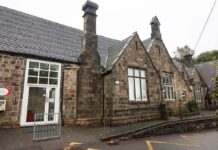

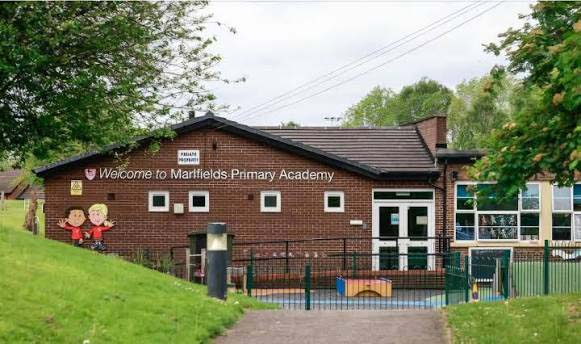
Marlfields Primary School has been told it must make urgent improvements in key areas including behaviour, early writing and early-years provision, following an Ofsted inspection carried out on 7th and 8th July.
Inspectors found safeguarding to be secure and highlighted several strengths in curriculum development, inclusion and personal development, but judged achievement, behaviour and early years as “needs attention”.
The school, on Waggs Road, Congleton, is part of the Children First Learning Partnership Trust.
The inspectors said leaders had overhauled many curriculum subjects since joining the trust, clearly setting out the knowledge pupils should learn in each year group.
Teachers were praised for secure subject knowledge, clear explanations and effective checks on pupils’ understanding. Staff adapt their teaching well for pupils with barriers to learning, including those in the school’s specially resourced provision for pupils with social, emotional and mental health needs.
However, inspectors found weaknesses in the teaching of writing.
Staff “are less clear on how to teach pupils to write accurately” and do not address handwriting and spelling errors with enough urgency. This means gaps in pupils’ transcription skills persist and limit their ability to record work fluently across subjects.
In the specific areas, curriculum and teaching met the expected standard.
Teachers had “secure” subject knowledge, which enabled them to explain new learning clearly. They benefitted from the “high-quality” training they received and regular “helpful” feedback. The school made regular checks on pupils’ learning to see how well they understand and remember what has been taught.
Inclusion was also judged to meet the expected standard.
The school had “sharpened” the way in which it identified pupils’ needs and did so with greater precision, which led to suitable support being put in place when it was needed. Staff received extensive training and used calm areas, visual prompts and “well-considered” timetables to help pupils access learning successfully.
Disadvantaged pupils participated fully in school life through suitable use of the pupil premium grant.
Leadership and governance were also found to meet the expected standard. Those responsible for governance had “a clear oversight” of the school’s work, and school and trust leaders worked collaboratively to bring about change, and staff feel valued and supported.
Personal development was judged positively and met the standard.
Pupils understood British values, treated others with respect and learned how to keep themselves safe, including online and near water. Pupils enjoyed a wide range of clubs, from cookery and gardening to football and producing a school magazine, and were proud to represent the school in tournaments and choir performances.
Achievement, however, remained a concern.
By the end of key stage two, attainment in reading, writing and mathematics was below national averages. Although pupils achieved better in reading due to secure phonics, some did not form letters and numbers correctly, limiting progress in English and maths.
While recent curriculum improvements were helping current pupils make better gains, older pupils still had gaps in knowledge.
Behaviour and attendance also needed improvement. Staff did not apply the renewed behaviour policy consistently, and some incidents in lessons went unchecked, causing disruption. Attendance remained below national averages, though persistent absence was reducing. The school leaders did analyse incidents of unsafe behaviour deeply enough to identify patterns and trends that could help reduce these occurrences over time.
In Early Years – also in need of attention – the school had made recent improvements to the curriculum, and prioritised the high-quality teaching of phonics and mathematics so that children gained the essential knowledge and skills that they needed to build on for future learning.
But children did not have access to “well-considered opportunities” to use and apply what they have learned independently. As a result, children were not fully prepared for the learning they will encounter in year one.
Phonics was taught well in the reception class but children did not transfer this into their early writing well.
In general, pupils were greeted “warmly” by staff each morning as they arrived at school. On the whole, pupils behaved well in classrooms and during playtimes and were polite, respectful and kind to each other.
On occasion, they could be distracted in their learning by pupils who “struggle to manage their emotions” and some pupils did not feel that adults dealt with poor behaviour consistently well.
The school was told to:
- Ensure that the strengthened approach to managing pupils’ behaviour was followed consistently;
- Ensure a clear approach to the teaching of transcriptional skills so that pupils begin to write with accuracy and fluency from the Early Years; and
- Ensure that children in the Early Years had suitable activities and opportunities to use and apply their learning.
The total number of pupils at the school was 182, below the capacity of 206. Some 34.36% of pupils were eligible for free school meals, close to the national average, 9.89% of pupils had an education, health and care plan, well above the national average of 3.5%.