

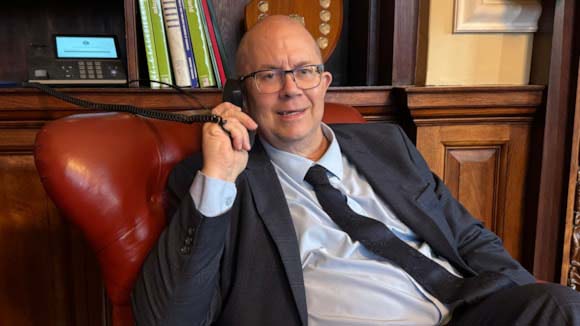
Families across the area have been encouraged to help older friends, relatives and neighbours to say safe, connected and independent by checking in with them about their landline.
The UK’s traditional copper landline network is being retired, moving onto digital landlines ahead of the industry-wide analogue switchover in January.
This means the existing analogue network, which has supported phone and broadband services for decades, is being switched off.
The change will affect anyone who has a landline they want to keep using.
It will help make the UK’s landline services better, with benefits such as clearer calls and improved protection from nuisance and scam calls, and while for most people, the switch will be simple, some may need support.
People who already have broadband will usually just need to plug their phone into their broadband router instead of the wall socket.
Those who use telecare equipment such as pendant alarms or fall detectors, or anyone with specific requirements, will need more support but their landline provider should contact them to make sure they get the right help.
It is important that people respond when their provider gets in touch, so they can avoid any disruption to their service.
For people who do not have an internet connection, a landline-only option will be available.
County Coun Martin Rogerson, Staffordshire County Council’s Cabinet member for health and care, said: “For many older people, a landline is their connection to family and friends, a source of reassurance and, in some cases, a vital link to emergency support.
“That’s why we’re asking people to take a few minutes to check in with parents, grandparents, neighbours and friends.
“It’s vitally important to ensure that their landlines keep running smoothly. The system is being upgraded to newer digital technology that offers more safety features, like scam-call screening, and even offers the option for three-way conversations.
“Helping someone understand what’s changing, checking if they have a device such as a pendant alarm or falls detector, and encouraging them to contact their provider could help keep them connected and independent.”
Most customers will be contacted directly by their telephone provider up to four weeks before they need to switch, but residents who use telecare equipment are being urged not to wait and contact their providers directly.
Many devices will work with digital services, but some may need checking, upgrading or reconnecting to ensure they continue to operate reliably.
The council is also reminding people to be alert to potential scams linked to the switchover.
Criminals may target older and vulnerable residents by claiming they need to make a payment or provide bank details to avoid losing their phone service.
County Coun Rogerson added: “One of the most important messages we want people to remember is that the switchover itself is free. “No legitimate provider, council service or health organisation will ever ask for bank details to upgrade a phone line.
“If something doesn’t seem right, stop, take a moment and seek advice before sharing any personal information.”
BT customers can find out more information on its website (bt.com/connected-together) and can also register to book onto free customer webinars and hear directly from the experts.
The traditional Public Switched Telephone Network is being switched off because older copper wires are expensive to maintain and prone to failures.
Fibre-optic cables use pulses of light instead of electricity, allowing them to carry vastly more data at much higher speeds.
Fibre connections do not degrade over long distances like copper and resist weather-related interference.
Traditional landlines plugged into wall sockets will no longer work; voice calls will run via an internet router using Voice over Internet Protocol.
Unlike traditional copper phones that powered themselves from the exchange, digital landlines need mains electricity and will not work during a power cut unless users have a battery backup.
“Full fibre” is available in many areas, known as fibre to the premises. Where this is not installed, people will keep the analogue line coming into their premises but the rest of the network from the roadside cabinet will be changed to fibre, updated again to fibre to the premises at a later date.
Telephone numbers can remain the same, as long as people make it clear to service providers that they want to keep their number during the migration.
This is not something that provider decided to do by themselves – the telephone network across the whole country is being changed to the new internet-based system, and every household and business will have to adapt.
This is the telephone version of when analogue terrestrial television switched over to digital terrestrial television between 2007-12.