
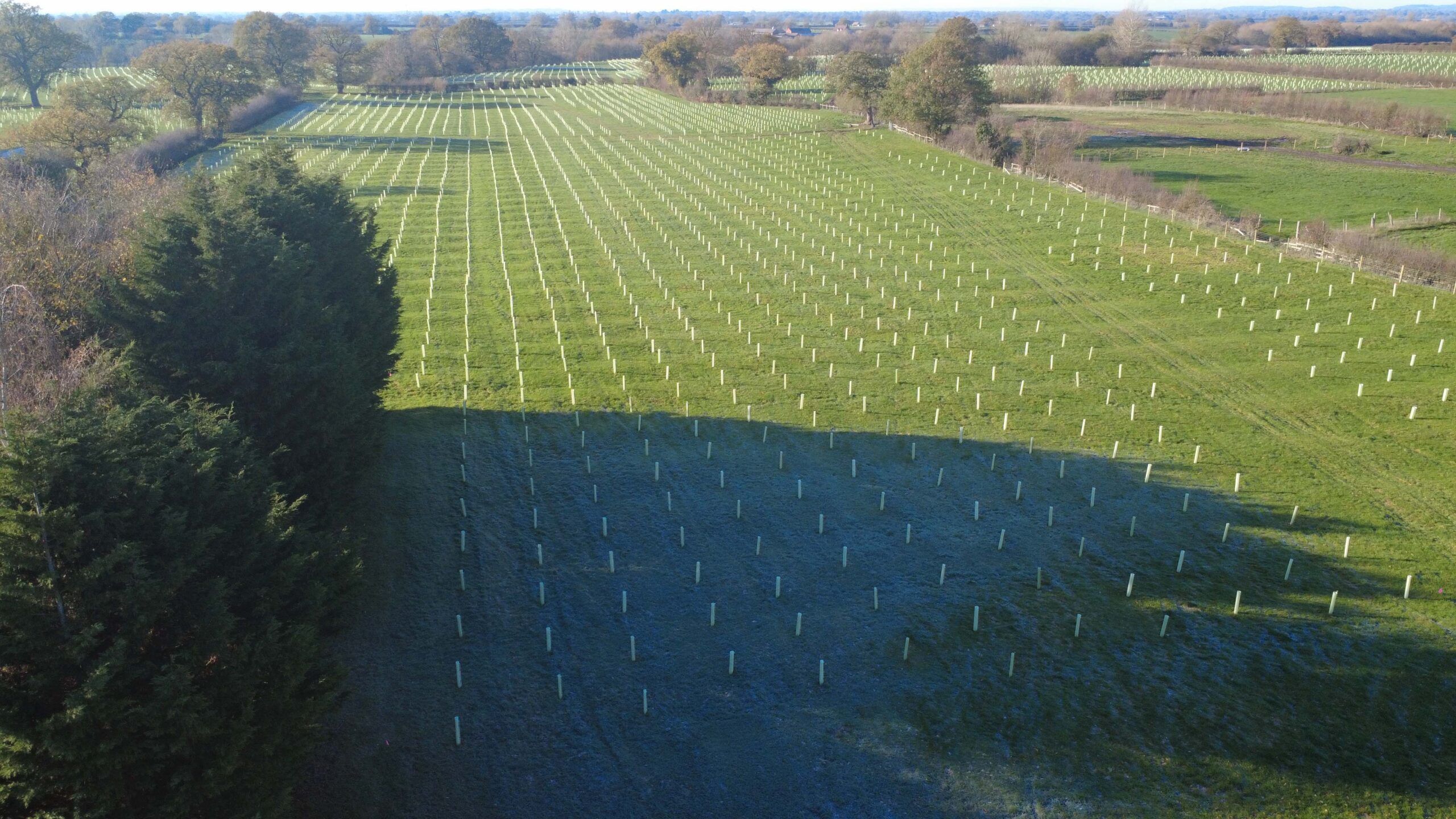
Cheshire East has announced “a major milestone” in its climate work, having successfully created 120 hectares – equivalent to 300 football pitches – of new woodland across the borough.
The achievement, presented in the annual update to the Environment and Communities Committee, represents the delivery of an ambitious target to increase carbon capture, boost biodiversity and enhance local green spaces.
The council has also refreshed its Carbon Action Plan, which it said reaffirmed its commitment to becoming carbon neutral in its operations by 2030.
Supported by Defra’s (Department for Environment, Food and Rural Affairs) Trees for Climate funding and delivered alongside The Mersey Forest and Cheshire Wildlife Trust, the programme includes seven major new woodland schemes and numerous smaller planting areas.
Among the thousands of trees planted, several rare black poplars – one of Britain’s most endangered native species – have been included to support the recovery of a tree once common in the UK’s rural landscape. Their addition represents a biodiversity gain within the wider woodland creation programme.
Coun David Jefferay, chair of the committee, said: “Reaching 120 hectares of new woodland is a remarkable achievement and reflects years of hard work from council teams and our forestry partners. The scale of planting will make a long-term contribution to carbon capture, biodiversity and natural flood management.
“I’m also pleased that the programme has allowed us to support rare species such as the black poplar, and that we have been recognised nationally through shortlisting for a Confor Award for Net Zero Innovation.”
“The success of this woodland creation programme demonstrates how climate action and ecological recovery can go hand in hand. While the overall scale of planting is the major achievement, incorporating black poplars adds an important conservation dimension.
“These rare native trees support unique wildlife and help reconnect fragments of a once widespread species. Their inclusion shows how our refreshed Carbon Action Plan continues to deliver wider environmental benefits for future generations.”
Picture: The Batherton Estate, near Nantwich.