
 Agency by William Gibson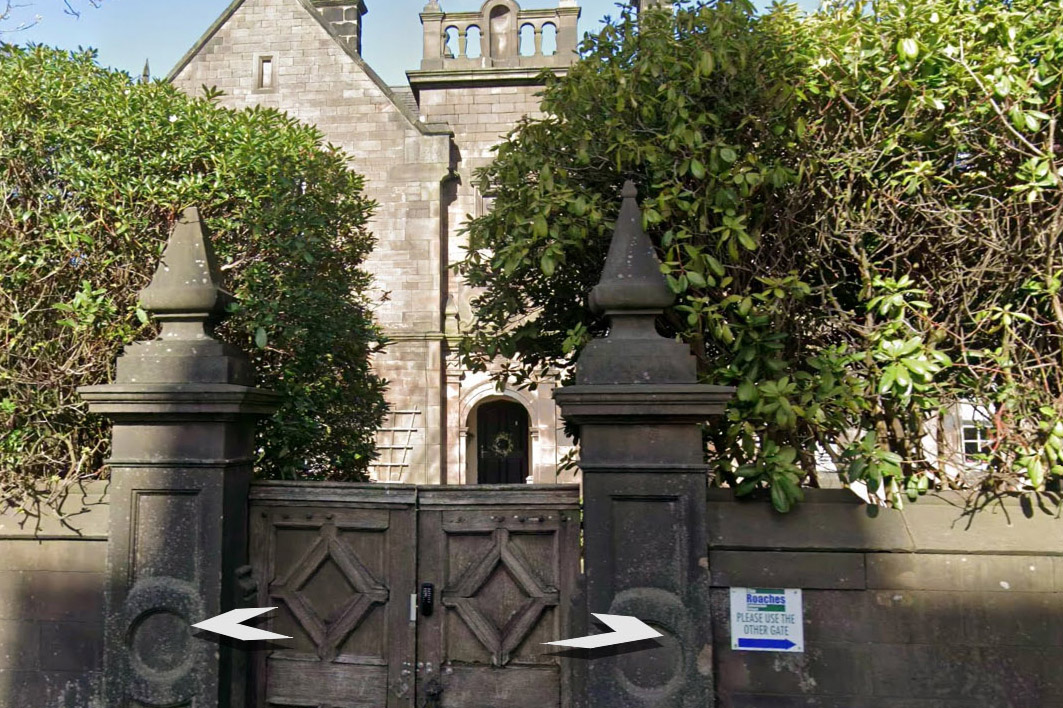
A special school still does not meet all of the independent school standards required, an Ofsted inspection has said — although it had made rapid progress and improved in many areas.
At its most recent full inspection, Roaches School, Tunstall Road, Knypersley, failed to meet all of the independent school standards and associated requirements.
The latest inspection was to monitor the progress the school had made in meeting the standards — and found it had only part succeeded, mainly because so much had been wrong in the first place.
The school operates from three sites — secondary age pupils attend the upper school at Tunstall Road, primary age pupils go to Lower Roach End Farm, Meerbrook, near Leek, and vocational study for secondary pupils is at Brown Lees.
The inspection said a new, permanent headteacher was appointed soon after the latest inspection, in October 2025. She “quickly prioritised” addressing weaknesses in safeguarding, and had been successful.
She had also addressed unmet standards relating to welfare, health and safety, premises, provision of information and complaints, but this focus on safeguarding and health and safety had delayed the start of the school’s work to improve the quality of education, so the report said this remained ineffective.
In addition, the school was not recording pupils’ attendance in line with regulations.
The latest report said that in the inspection in September 2025, the inspectors raised “significant concerns” around the quality of the school’s curriculum and how it was implemented within the secondary school phase.
The curriculum did not have the required breadth, subject curricula did not identify the knowledge pupils should learn and teachers did not spot or address gaps in pupils’ knowledge.
The curriculum also did not take into account the ages, aptitudes and needs of pupils, or the requirements of their education, health and care plans, which meant learning was not being adapted appropriately to meet pupils’ needs.
The school did not provide effective support for secondary age pupils who struggled with reading and pupils were not studying a coherent personal, social, health and economic education programme.
Inspectors also found the school was not providing pupils of secondary age with an appropriate programme of relationships and sex education.
Identified
The latest report said the school had identified schemes of work and planned to introduce these at the start of the next school year. The new, broad curriculum had identified what pupils needed to know.
Once implemented successfully, it would support teachers to provide learning that built pupils’ knowledge from key stage one to key stage four in an “organised and coherent” way, the latest report said. Teachers were being trained to deliver the new curriculum in readiness for the new academic year.
However, this curriculum is not yet in place and secondary school age pupils were not receiving an effective quality of education.
The standard relating to behaviour in lessons was being met, however. Poor behaviour had previously been a common feature in the secondary phase, and staff had to use physical restraint frequently.
In the full inspection, inspectors found that the school’s safeguarding arrangements were not effective, particularly in the secondary phase. Record keeping was incomplete and did not provide a coherent overview.
The latest report said the school had implemented an effective safeguarding policy. Designated safeguarding leaders have had appropriate safeguarding training and staff had completed basic safeguarding training.
The school had put effective safeguarding systems in place and now kept “robust” records of safeguarding. Pupils said they felt safe.
The full inspection found evidence of bullying taking place in the secondary phase but the school now had an effective anti bullying strategy in place. Bullying was now rare and addressed effectively, the latest report said.
Risk
It was not just in the classroom that the school was failing. The previous inspection found that the school health-and-safety policy was not being implemented effectively.
A fire risk assessment had lapsed, there were no records of fire drills on one of the sites, no records of regular health and safety checks, including electrical and water checks, and concerns around site security, raised in a local authority safeguarding review, had not been addressed. The school did not have the necessary records for the administration of first aid and lacked appropriate accommodation for sick secondary age pupils.
The latest report said the new head had identified and completed “appropriate actions” to address these failings. External reviews of fire safety had taken place for all sites and fire risk assessments were in place. Additional secure fencing had been erected.
However, the school was still not recording non-attendance accurately. This meant that the school did not have a clear picture of trends and patterns of non-attendance, and did not have accurate information upon which to base plans for addressing pupil absence.
Inspectors found that there were no suitable toilet and washing facilities on the upper school site. There was also no appropriate medical room on the upper school site. Drinking water supplies were not identified.
The school had now addressed these issues. Pupils’ and staff toilets were separate on all sites, and the school had converted a room for use as a medical room on the upper school site. Drinking water supplies are all clearly labelled as such.
The school provides education for pupils with social, emotional and mental health needs, and the majority of pupils who attend the school have an education, health and care plan.
The school proprietor is Dr Sean Fitzpatrick and the headteacher Emma Johnson.
The school has the capacity for 58 pupils but had 37 pupils on the roll at the time of the inspection, with five part-time pupils. The age range of pupils is 5–16.
The annual fee for day pupils is £53,200. Companies House records show that Care Today/Parallel Parents Ltd, the parent company of Care Today (Children’s Services), which operates the Roaches, made a profit of £2.6 million last year on turnover of £20 million.