
Staffordshire Moorlands residents’ concerns about a proposed 121-mile underground carbon dioxide pipeline passing through their district have been shared with county councillors.
The Peak Cluster Pipeline is intended to transport CO2 (carbon dioxide) from cement and lime plants in Staffordshire and Derbyshire to the coast, to be transferred to an offshore storage site, with the aim of reducing emissions while supporting jobs and economic growth.
It will pass through the Moorlands then into Cheshire via North Rode and then round Goostrey.
The final decision on the Peak Cluster Pipeline will be made at national level, because the scheme is considered a nationally significant infrastructure project.
Staffordshire County Council is a statutory consultee for the scheme, however; on 25th June, a committee called for the impact of the proposed Peak Cluster Pipeline to be debated at a full council meeting.
County Coun Andrew Mynors, Cabinet member for connectivity, told the Economy, Infrastructure and Communities Overview and Scrutiny Committee on Thursday: “I think a lot of people in Staffordshire Moorlands have been worried about a pipeline going through their communities.
“They’ve been asking councillors to bring this to scrutiny, to have a look at what’s happening and how it’s going to impact on their communities.
“There’s an economic impact on extraction activity and supply chain and I believe there’s going to be a £5bn investment across the project.
“It’s going to affect Staffordshire, Cheshire and The Wirral – there’s going to be environmental impacts in the construction phase and long-term operation and maintenance. Local government reorganisation will perhaps be impacted because it’s crossing a number of councils.”
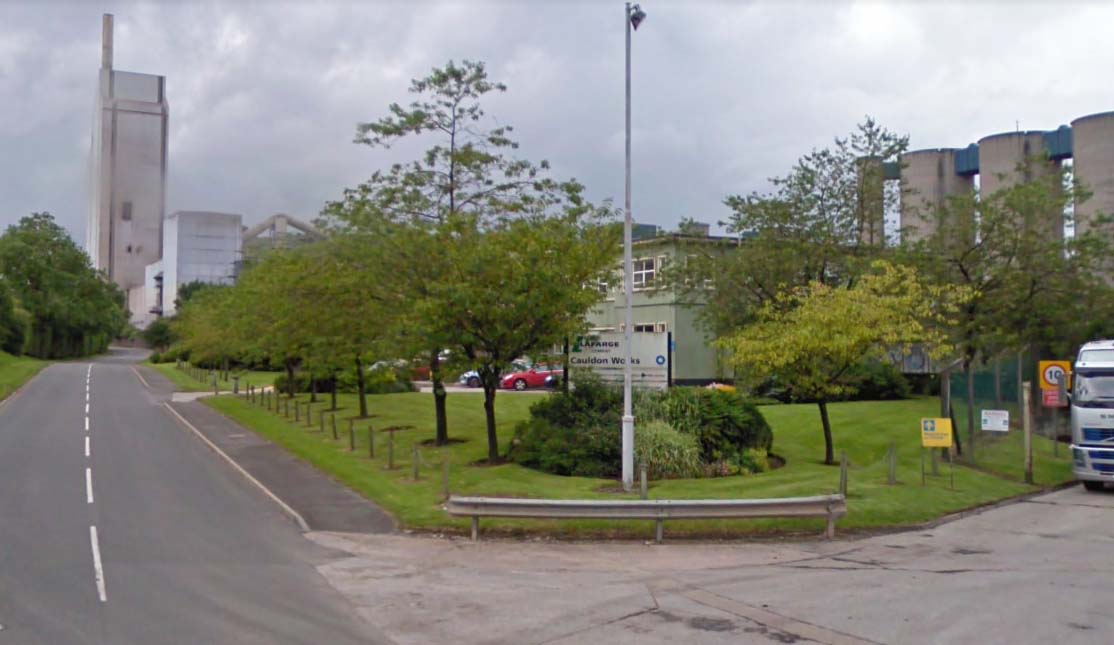
He said the Peak Cluster involved Staffordshire’s Cauldon Cement plant and three works in Derbyshire, all involved in a carbon capture projects.
Concrete production makes a lot of CO2, which is responsible for global warming, and the pipeline will remove it from the atmosphere and store it underground below the Irish Sea.
County Coun said that there were two processes of consultation.
“It’s been proposed by the Government as a nationally significant infrastructure project to decarbonise the cement and lime industries,” he said.
“It’s going to consist of new technologies, trying to capture the CO2 from the cement sites, extract the CO2 and send it through to Liverpool.
“It’s a very long and costly pipeline – I believe it’s about a metre in diameter. The carbon capture technology is a new technology.”
Mark Parkinson, head of planning policy and enabling at the council, said the scheme was at “the very early stages”.
A taskforce of officers was to be established to look at the project.
County councillors representing Staffordshire Moorlands divisions were invited to address the committee.
Coun Sonny Edwards, who represents Leek South, said: “It goes through the north of Leek.
“A lot of landowners are concerned that it will go through their land, devalue their land or homes and might damage their crops. They feel some safety concerns as well, with this being literally in their back yard.
“With it being so close to the town, there is also the town’s safety. It travels through the Rudyard Lake and Tittesworth area and we want to make sure it isn’t going to contaminate any water.”
Coun Gary Bentley, who represents Cheadle and Checkley, said: “The bit I’m struggling with whether we have exhausted all opportunities. There’s a railway track that goes from the quarry that was used up until around 10 years ago, and it’s still there.
“I’ve read and Googled that in Germany they’ve put all the fluid onto the railway tracks and transport it on tankers. That is something that would be less disruptive and it would give life to the railway we’re all trying to support – it’s a perfect opportunity to get a railway up and running and not dig through the Moorlands.”
Coun Su Beardmore, who represents Churnet Valley, said: “One of the main things that’s been raised by residents near me is the noise and traffic disruption when construction actually starts onsite. It’s such a huge project that will cover a wide area.
“Another issue is the fact there’s no specific area that’s been put forward – there’s just a very open-ended planning application with a very wide area. There’s no actual route been put forward.”
County Coun Bob Egginton, who represents Biddulph South and Endon, said: “There’s thousands of questions to be asked. I don’t think this carbon capture project has ever been done on this scale before.
“The pipe will be 160-200km long, railroading through the countryside. We don’t know the material, wall thickness or assembly of the pipe.
“There are certain considerations we need to take into account on the safety aspect. For this panel there are a lot of considerations with regard to health and safety procedures and highway disruption.”
An indicative timeline for the project, included in the report to Thursday’s meeting, has suggested that if a development consent order is granted in 2029, construction is expected to take around three years, with the project being operational in 2032.
By that time, Staffordshire County Council is expected to have been replaced by a new local authority as part of local government reorganisation.
• Factcheck: Germany does use trains for captured C02 from industry, including cement but this is not a permanent solution and pipelines are planned in the longer-term. The German Government aims to establish at least one “large-scale” carbon capture project each in the cement and lime industry and in waste incineration before 2030. Germany aims to have the first facilities in the country’s north connected to a CO2 pipeline network by 2030. Until then, CO2 will be transported by rail, inland waterways or trucks. By 2045, Germany will have a CO2 grid of a total length of 4,500 kilometres. (See cleanenergywire.org, search for factsheets or “germanys draft carbon management strategy”).