
Closures of rural bank branches can have a “devastating effect” on charities, with people having to travel to distant branches with “their great grandparents, their first cat and everything else to prove who they are”, a local MP was told in Parliament.
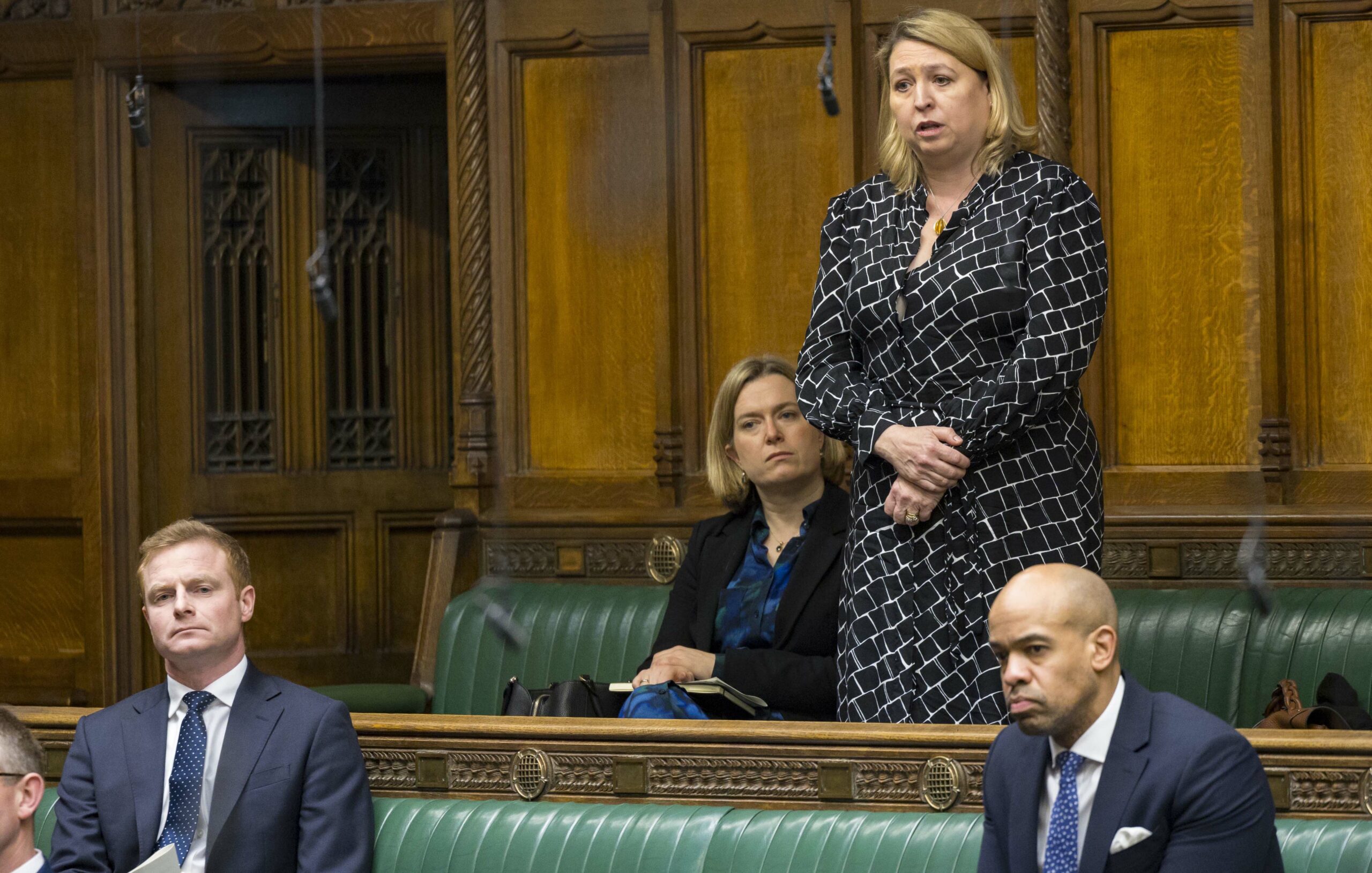
Dame Karen Bradley, MP for Biddulph, was speaking in a Parliamentary debate about bank closures in rural areas, which had been initiated by North Dorset MP Simon Hoare.
He said that the closure of a high street bank “hits an area hard”, whether the area was urban or rural.
“North Dorset is a rural constituency, and the thrust of my thesis is that the impact is felt disproportionately harder in rural communities than in an urban setting,” he said.
Dame Karen, who thanked the MP for letting her interrupt his speech, said that she was struck by the impact on charities of the closure of rural banks.
She said: “As any trustee of a charity will know, trustees quite regularly have to prove their identity at the bank that the charity chooses to bank with.
of the bank to prove their identity, the impact on rural charities will be devastating.”
Mr Hoare said he admired Dame Karen’s perseverance in ever trying to change the signatory on a charity bank account.
He said: “People have died of boredom and exasperation trying to do it. A 60-year-old has to turn up with their great-grandparents, their first cat and everything else to prove who they are. The fact that the bank has known them as a private customer for years seems to pass it by.”
Dame Karen said that Leek was about to lose its last two banks and would be left with a building society with a cashpoint and the post office, yet a banking review had suggested that the town did not need a banking hub because there were sufficient branches nine or 10 miles away.
“That does not take account of rurality,” she said.
“We are a market town with a hub-and-spoke model, and it simply is not possible for elderly people to get to those other bank branches that are not easily accessible and are not on bus routes. Rurality and topography are incredibly important and should be considered when deciding on banking hubs.”
Mr Hoare agreed, saying that a bank had told him: “If customers need to talk to an actual person, they could use the branch in Poole”, which would take two days out of the week, because those customers would have to get a bus to Poole, book a hotel, stay over and get the return bus the following day.
Mr Hoare said he had lost 14 banks in his constituency since 2015. In 440 square miles, there were five banks remaining. Across the county of Dorset, which includes the major conurbations of Bournemouth, Christchurch and Poole, there had been a decrease of 68% overall, with 101 branches closed and only 48 remaining in the whole of the county. Eight Parliamentary constituencies are served by just 48 banks, he said.
A House of Commons Library report said the number of bank branches in the UK had declined due to advances in technology and changing customer habits.
It said: “Stakeholders have argued that these closures have negatively affected rural communities. In recent years, successive governments and the Financial Conduct Authority have taken action aimed at ensuring sufficient access to banking services, including for rural communities.”
Data from the British Banking Association and the Office for National Statistics has shown that in 1986 there were 21,643 bank and building society branches in the UK, compared to 6,870 in 2024.
“Which? Money” last year said that Yorkshire and the Humber now has the worst ratio of bank branches to population in the UK. Nine parliamentary constituencies in Yorkshire have no bank branches.
The magazine said that the Congleton constituency had lost 80% of bank branches since 2015, with the Moorlands losing 69.2%.
Newcastle-under-Lyme had lost 53.8% of its banks, Stoke-on-Trent North 85.7%.
(Photo: House of Commons / Roger Harris.)