

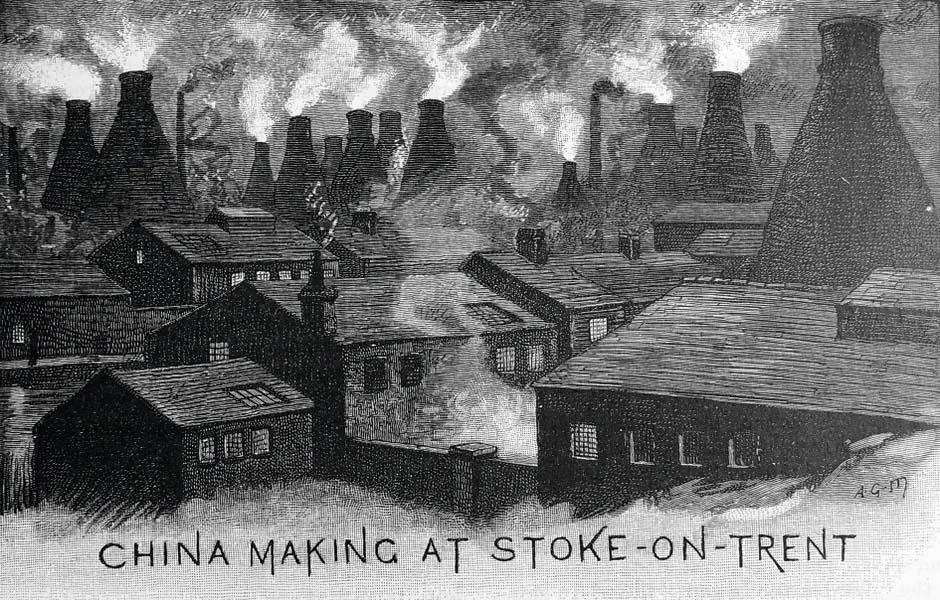
Two Biddulph politicians have added their voices to a growing national call for urgent support for the ceramics industry, following a “Guardian” editorial highlighting the challenges facing Staffordshire’s potteries.
The editorial warned that the sector faced an “existential crisis” after four ceramics firms either collapsed or moved production overseas in the past two years.
It cited the recent decision by Fiskars Group, parent company of Wedgwood, to pause production for 90 days and place 70 workers on temporary leave.
The article provoked people to write to the paper, and former Stoke North MP Joan Walley, who is from Biddulph, and Coun Dave Proudlove, from Knypersley, both responded and had their letters printed in Saturday’s edition of the paper.
Ms Walley urged the Government to recognise the scale of the crisis and act decisively.
She wrote: “Will the Government grasp the immensity of the situation we face? It needs to urgently focus its industrial strategy on short-term transitional support for intensive users of energy, to help them towards emissions reductions targets.”
She called for both the short-term transitional support for energy-intensive industries such as ceramics, alongside long-term investment in research, design, and skills.
Ms Walley also highlighted the heritage costs of widespread potbank closures, stressing the need to invest in derelict industrial sites and cultural assets linked to the region’s manufacturing legacy.
“Collective efforts to rescue Middleport Pottery showed a way forward,” she wrote.
“We are grateful for the several grant programmes that are starting to emerge, but two swallows don’t make a summer.
“All these derelict industrial sites, together with the public buildings and cultural assets that came about as a result of our local industry, need investment, too.”
Ms Walley emphasised that ceramics remained essential to the national economy and urged the Government to work with local MPs to deliver a long-term strategy that protected output, skills, and heritage buildings — especially in Stoke-on-Trent’s centenary year.
Historic
Biddulph councillor Dave Proudlove reflected on the historical link between local energy and manufacturing. He noted that the Potteries’ success was once fuelled by fast-burning coal, but clean air legislation and the shift away from coal had severed that connection, contributing to the industry’s decline.
Coun Proudlove proposed investment in green energy infrastructure as a way to re-establish that link, citing sites such as the former Chatterley Whitfield colliery as potential hubs.
He also called for greater collaboration among ceramics firms in marketing the Potteries as a world-class brand.
“Josiah Wedgwood was a marketing pioneer, and his legacy is there to learn from,” he wrote.
Wedgwood’s genius for marketing means that his anti-slavery phrase: “Am I not a man and a brother?” is still in use today.
The “Guardian’s” editorial traced Wedgwood’s historical significance, from its role in 18th-century diplomacy with China to its mid-20th century global workforce of 12,000.
It argued that outsourcing production overseas damaged the brand’s heritage value and contributed to job losses in Stoke-on-Trent.
While Fiskars has invested in the World of Wedgwood visitor centre, much of the company’s manufacturing remains abroad.
“While Tangerang (Indonesia) enjoyed a $25 million investment, Stoke-on-Trent haemorrhaged jobs to workers who were paid just one eighth of the wage of British employees,” said the “Guardian”.
It noted that outsourcing was not solely to blame: “As (ITALICS former Stoke MP and historian) Tristram Hunt noted in his 2021 biography of Josiah Wedgwood, executives began a debt-fuelled acquisition spree in the 1990s, paying themselves handsomely while laying off more than a thousand staff.”
The piece also cited economist Andy Haldane’s criticism of the Government’s “arid” growth strategy and called for more immediate support with energy costs.
It praised firms such as Burleigh and Emma Bridgewater for maintaining production in Stoke and preserving artisanal skills, saying authenticity still had value as people were willing to pay for it.