

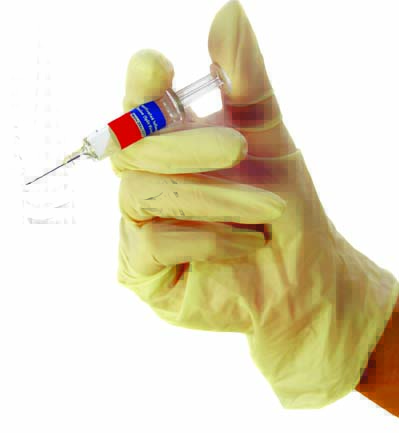
Families are being urged to check that their children’s MMR and chickenpox vaccinations are up to date as measles cases continue to rise across England.
Latest figures from the UK Health Security Agency show that between 1st January and 9th February 2026, there were 96 confirmed measles cases nationally, including 79 in the four weeks since 12th January.
Dr Ash Banerjee, public health consultant at NHS England in the Midlands, said parents should feel confident seeking advice about the new MMRV vaccine, which protects against measles, mumps, rubella and chickenpox. She said it was “never too late” to catch up on missed doses and urged families to check their child’s vaccination record. “The vaccines are safe and effective, are quick and help protect your child, their classmates and the wider community,” she said.
Matthew Missen, consultant in public health for NHS Staffordshire and Stoke-on-Trent Integrated Care Board, said the national rise in cases was worrying because measles spreads easily among people who are not fully vaccinated. He warned that the illness can lead to serious complications including pneumonia, meningitis, blindness and hearing loss.
“Getting the MMRV vaccine for your child is the best way to prevent measles, mumps, rubella and chickenpox infections, and protect others,” he said.
Early symptoms of measles include a high temperature, runny or blocked nose, sneezing, cough, red and watery eyes, and a rash that usually appears a few days later, often starting around the ears before spreading across the body. The illness can lead to ear and chest infections, diarrhoea and dehydration, and in rare cases more severe complications. Babies, pregnant women and people with weakened immune systems are at greater risk.
Anyone who suspects measles should seek an urgent GP appointment or contact NHS 111, and call ahead before attending so arrangements can be made to reduce the risk of spreading infection. People are advised to avoid nursery, school, work or group activities for at least four days after the rash appears or until they have been seen by a doctor.
Measles spreads through coughing and sneezing and can remain in the air or on surfaces for up to two hours. Regular handwashing, good ventilation and avoiding shared items such as cups, towels or bedding can help reduce transmission.
Government figures show there were 2,911 laboratory-confirmed measles cases in England in 2024 — the highest annual total since 2012. In 2025, there were 959 cases. Between 1st January and 16th February this year, 130 cases were confirmed, an increase of 34 since the previous update on 12th February. Most cases are linked to an outbreak in north London. Of the cases so far this year, 76% were in children aged 10 and under, and 18% in people aged 15 and over. London accounts for 68% of cases, with 22% in the West Midlands.
In the United States, 982 measles cases have been recorded in 2026 — more than four times the number at the same point last year — with at least 20 hospital admissions. Most cases are among unvaccinated people. Statistically, around one in four people with measles will be hospitalised and one to two in every 1,000 will die.
Families who prefer vaccines without pork-derived ingredients can request suitable alternatives from their GP. Further information about the MMRV vaccine is available at nhs.uk/vaccinations/mmrv-vaccine.
(Photo: Hornpipe / Dreamstime).