
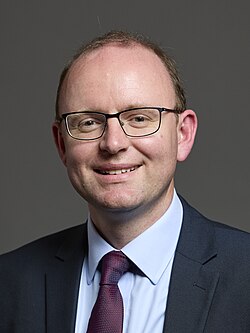
A bill aimed in part at improving air travel for disabled passengers has been welcomed by Mid Cheshire MP Andrew Cooper.
Mr Cooper, speaking in the House of Commons, said the aviation sector must treat passengers fairly and that disabled people should be able to access air travel “on an equal basis with everyone else”.
The Middlewich MP was speaking in a debate about the Civil Aviation (Consumer Protection and Regulatory Reform) Bill, which was having its second reading and will make a number of changes to legislation following the UK leaving the EU, to give the UK Government powers to legislate on air passenger rights and airport slots.
It will include regulations covering issues such as flight disruption, lost or damaged luggage, accessibility, price transparency and airline liability for passenger injury or death.
Mr Cooper said the Bill’s focus on disabled passengers was “especially welcome”.
“The principle it establishes is an important one: that disabled people should be able to access air travel on an equal basis with everyone else,” he said.
He said this included physical disability, neurodiversity, mental health conditions and needs that were not always visible. As the parent of a neurodivergent child, he said airports could be overwhelming environments.
He praised facilities such as the now-closed Sunflower room at Manchester Airport’s former Terminal One, saying they provided quiet spaces for passengers who found the main airport environment overstimulating.
“It is quite a good example of what thoughtful accessibility can look like,” he said, adding that such interventions could make “an enormous difference”.
He said many airports recognised the sunflower lanyard for passengers with non-visible disabilities and that he would like similar approaches adopted across the sector. He urged ministers to study best practice during the Government’s consultation.
Mr Cooper said disabled travellers had faced distressing situations, including being left on aircraft after other passengers had disembarked, or having wheelchairs and mobility aids lost or damaged.
“For that reason, I particularly welcome the (bill’s) removal of the liability limit when wheelchairs, mobility aids and other medical devices are lost or damaged on domestic flights,” he said.
He also raised wider passenger issues, including drop-off charges and access to airports.
He joked that the UK was “a proud, open and outward-looking nation: a nation of traders, travellers, adventurers and explorers — and, increasingly, a nation of people wondering why it costs quite so much to drop somebody off at an airport”.
He said Manchester Airport charged between £5.50 for five minutes and £25 for half an hour for drop-offs. He said charges must be “fair and proportionate”, particularly where passengers had no realistic alternative.
“If a review is to take place, I ask the minister to ensure that it considers whether passengers — particularly disabled passengers and those with additional access needs — genuinely have a realistic alternative to paying the charge,” he said.
He welcomed provisions on airspace modernisation, but said technology alone could not solve problems if there were not enough trained air traffic controllers.
“From a passenger perspective, it makes little difference whether a delay is caused by an airline, an airport or air traffic control,” he said.
He asked what the Government was doing to support the talent pipeline for air traffic controllers and whether workforce capacity was sufficient for the growth ministers wanted.
Mr Cooper said the bill sought to create a more effective regulatory framework and that strengthening protections for disabled travellers was “a significant step forward” in making air travel more accessible, dignified and inclusive.
He said he looked forward to the consultation and to ensuring the legislation delivered “real improvements for passengers across the country”.
Mr Cooper added that For his constituents aviation was a key source of employment in his constituency, with Jet2’s retail operations centre at Middlewich and close links to two major international airports, the Airbus site in Broughton and aviation fuel production in Ellesmere Port.
He said Parliament was having to legislate to “mitigate the haphazard and chaotic manner in which we left the EU”, adding that aviation was an industry where cross-border co-operation was “an absolute necessity”.
He said rules on safety, consumer rights and airspace could not be considered in isolation and that “protecting the rights of travellers must be at the heart of that effort”.
(Photo: Wikipedia)