
Nominally jazz, this enjoyable album (my only lament is that it’s too short) feels like what the Coen Brothers might produce if they made records.
Musically, it’s all over the place — from arty spoken-word ambient to Ennio Morricone-style soundscapes to smoky jazz — but the cinematic and atmospheric thread running throughout gives it a surprising sense of unity.
“Poems and Rain” opens the set and plays like pure film noir: gloomy, textured, and as rainy in sound as its title suggests. No sign of jazz here. Next up is “Norm Gunderson’s 3-Cent Stamp,” which begins like a dreamy take on the Stones’ “Gimme Shelter” before morphing into bluesy jazz piano and sax.
“Beatrix and Bill” is Tarantino meets Morricone — slow, bluesy harmonica gives way to a range of instruments (it’s eight minutes long, so there’s room to stretch). “Puppet” opens dreamily before settling into late-night jazz. “The White Lodge,” a mere five minutes long, is gloomy jazz again — the whole album leans toward the melancholic, but never to its detriment.
It’s an engaging and artistic album: atmospheric throughout, and despite there being only five tracks, it’s impressively varied.
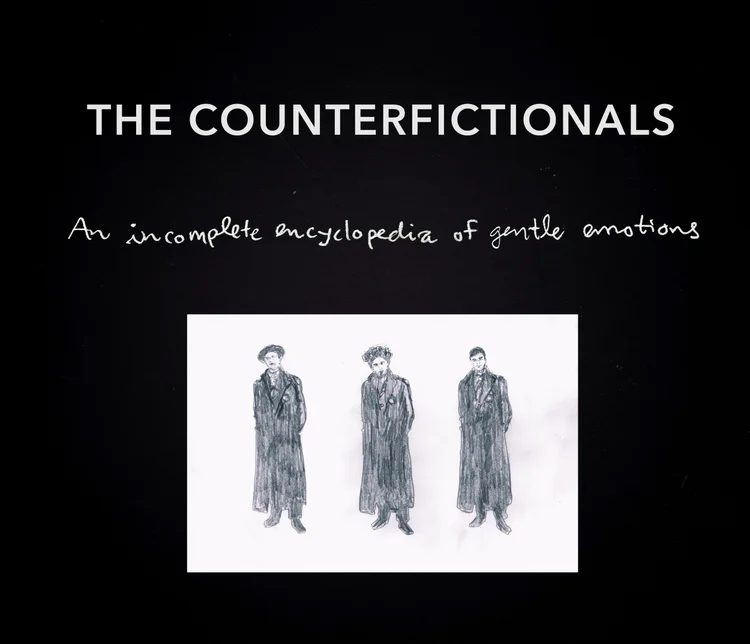
The Counterfictionals are a sextet from Copenhagen whose website says they’re inspired by filmmakers such as David Lynch, Jane Campion, Yorgos Lanthimos, Sergio Leone, Wes Anderson, A24, and Paul Thomas Anderson. Now I look, each track is imagined as the score to a fictional film: “Poems and Rain” is “Joyce in Paris,” starring Timothée Chalamet as young James Joyce and Tilda Swinton as “The God of Rain”; “Norm Gunderson’s 3-Cent Stamp” is based on “the world’s most beautiful love scene” from “Fargo”; “Beatrix and Bill” is based on Bill (“Kill Bill”) and “Puppets” on “Being John Malkovich”, where many characters have little control over their lives.
See here