
A local pharmaceutical firm that employs 429 people is the world’s first to produce an environmentally friendly inhaler.
Bespak, based at London Road in Holmes Chapel, is manufacturing the first low carbon pressurised metered dose inhaler to be approved and sold anywhere in the world. The inhalers use a new generation of low global warming potential propellant gases to deliver medicine into the lungs of people with conditions such as asthma and chronic obstructive pulmonary disease.
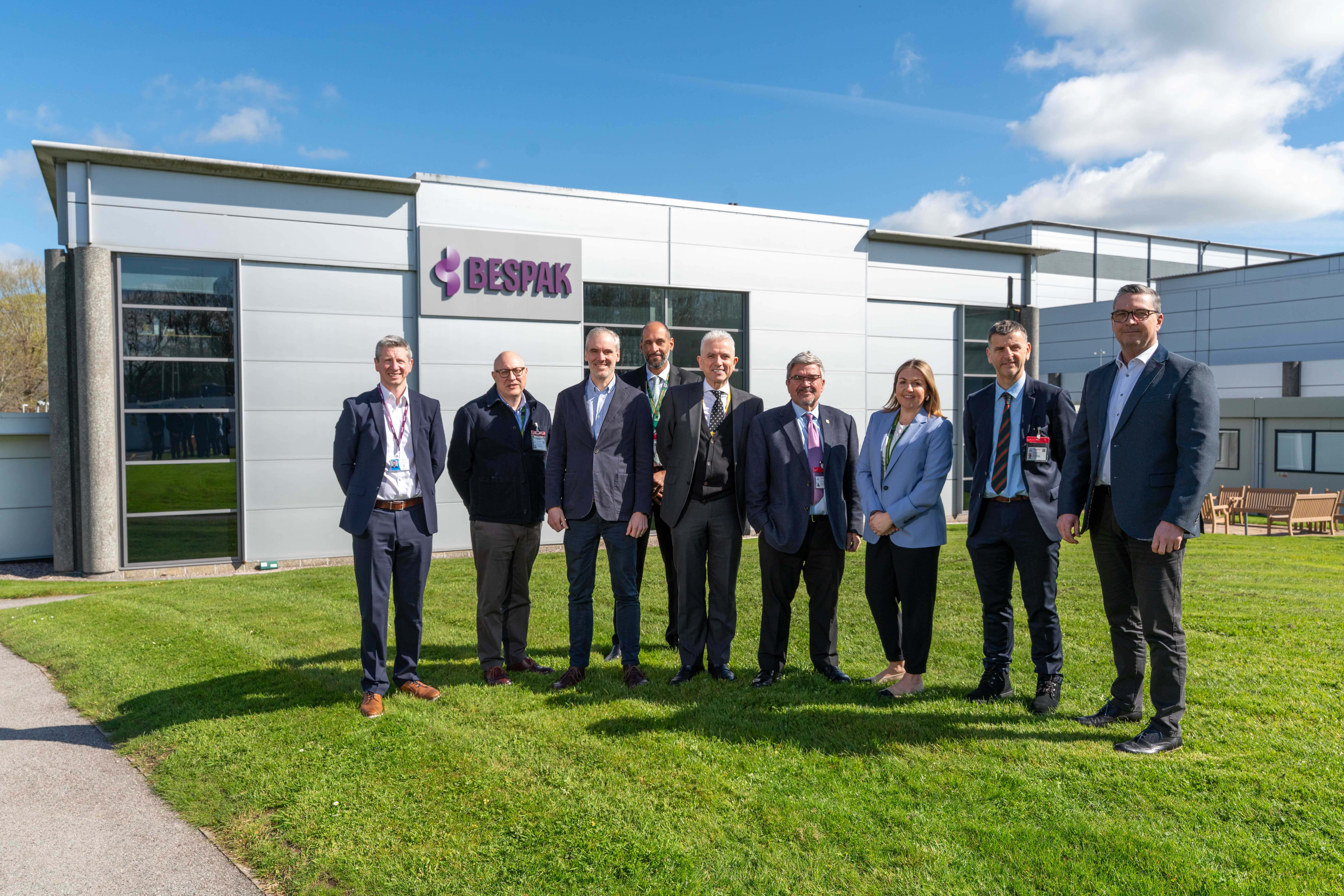
The leader and deputy leader of Cheshire East Council, Couns Nick Mannion and Michael Gorman, recently toured Bespak’s Holmes Chapel HQ as part of the council’s Made in Cheshire campaign.
The council said the visit recognised the company’s pioneering role in the global supply of inhalers, and its “significant contribution” to the local economy.
The council said the new technology supported the global shift away from older, higher emission propellants, which were classified as powerful greenhouse gases, and placed the borough “at the centre of green pharmaceutical manufacturing”.
Coun Mannion said: “It was inspiring to see, up close, a global life sciences breakthrough happening right here in Holmes Chapel.
“Bespak’s work is creating high-quality jobs and supporting our regional competitiveness, while making a real difference for patients as well as to the planet – something that very much supports the council’s carbon neutral ambitions.
“They are a perfect example of why Cheshire East is such an outstanding place to start, grow and sustain a business.”¬
Bespak is a global leader in the supply of inhalers and nasal sprays, manufacturing its own devices as well as producing branded products for pharmaceutical companies. It employs more than 1,250 people in the UK, including 429 at its Holmes Chapel site, and continues to expand advanced manufacturing roles, apprenticeships and specialist life sciences careers.
Coun Gorman added: “Cheshire East is home to one of the largest science and technology clusters in the UK, and Bespak’s world first manufacturing achievement is something the whole borough can be proud of.
“It demonstrates the strength of our advanced manufacturing sector and the exceptional talent that exists here in Cheshire East.”
Bespak CEO Chris Hirst said: “Our site in Holmes Chapel has a long history of developing and manufacturing inhalers and we are proud of that heritage.
“As the global transition to low carbon inhalers gathers pace, we are continuing to innovate and invest – ensuring that patients retain access to trusted treatments while reducing environmental impact.
“Leading this global shift from the heart of the Cheshire Science Corridor reflects our confidence in the region. We look forward to continuing to grow while supporting our local economy and communities.
“My ambition is that climate action, patient care and community impact all progress together.”¬
The Made in Cheshire East series of engagements will highlight the businesses, skills and sectors powering the local economy.
Businesses interested in taking part in the initiative can visit the council’s website and search for “Made in Cheshire East”.
Revolutionary idea was inspired by war
The development at Bespak is not the first breakthrough in Holmes Chapel.
The Spinhaler was a revolutionary breath-actuated dry-powder inhaler (DPI) developed in the 1960s by Fisons Pharmaceuticals to deliver medication, particularly sodium cromoglicate, for asthma treatment.
It used a propeller mechanism within a capsule chamber to aerosolize powdered medication when the user inhaled, often characterized by a whizzing sound.
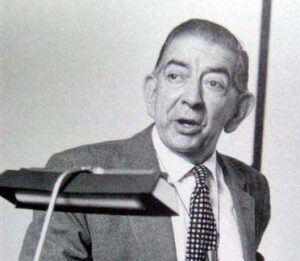
It was designed by Martyn Rowlands, Harry Howell and Roger Altounyan – the latter being the real-life Roger the Ship’s Boy from “Swallows and Amazons”.
Syrian born and Anglo-Armenian, Mr Altounyan met “Swallows” author Arthur Ransome in the Lake District, and Mr Ransome named some of the primary characters in his famous book after Mr Altounyan and three of his four sisters; Roger became Roger Walker, the ship’s boy. Mr Ransome later stayed with the family in Aleppo, bringing them a small dinghy to sail.
Mr Altounyan joined the Royal Air Force in 1941 and became a flying instructor. He was regarded as an “exceptional” instructor of bomber pilots and in 1943 he was appointed to the staff of a school for flying instructors. He was awarded the Air Force Cross for developing new techniques in night flying.
His flying experience was the inspiration for the Spinhaler.
He discovered the value of sodium cromoglicate in the 1960s, at a time when many of his medical colleagues wrote off asthma sufferers as hypochondriacs.
He was an asthmatic himself, and determined to prove them wrong.
He conducted experiments on himself rather than relying on animal studies in his lab at Fison’s, testing about 500 compounds.
Then he researched how best to dispense his drug into the lungs of patients – and thanks to his time spent flying, hit on the idea of the Spinhaler.
The treatment came as a dry powder inside clear orange and white capsules, called Spincaps. These were inserted into the Spinhaler and the contents could then be breathed into the lungs. The Spinhaler made its whizzing sound as it worked, which made it popular with children.
Sandbach man George F Wood wrote with his memories of Mr Altounyan after the “Chronicle” ran a feature 20 years ago.
He wrote: “I had the privilege of working alongside Ali, as we called him, from 1960 until 1965 at Fison’s pharmaceutical research base in Holmes Chapel.
“He was an extraordinary man, who combined his work as a chest physician at Wythenshawe Hospital with his other work at Fison’s, which researched the effects of khellin on relaxation of smooth muscle.
“His work on this project was somewhat unpredictable, as no-one was ever really sure when he would or would not turn up to his office at Holmes Chapel.
“Khellin had been known as a folk remedy in the Middle East and Mediterranean areas for centuries and it was our job to create as many khellin molecular variations as needed in order to produce one that would not only be beneficial to human asthma sufferers, but also create financial benefits to the company.
“ I clearly remember a delivery of khellin to Fisons. A huge pile of what looked like bleached, twisted tree branches was deposited in an enclosure outside our laboratory.
“The job fell to me and Derek Gibbons to reduce this pile to a micro-fine powder, which we did over a long time using a saw a kitchen grinder and, finally, a ball mill.
“The job of testing the therapeutic value of these various compounds fell to Ali himself. He was not in favour of using animals for such as efficacy or toxicity testing, and indeed the results that he obtained using his own body often conflicted with results obtained by animal testing.
“Ali could self-induce a histamine mediated asthmatic attack simply by rubbing his hand with guinea pig or rabbit fur, and sniffing the result.
“There was more than one occasion when the test didn’t have the desired effect and Ali needed to inject himself with atropine to stave off possible disastrous consequences!
“(His) RAF memories suggested that the turbulence caused by revolving propellers may well help in making molecular particles become airborne and transfer into the human respiratory system. Hence was born the Spinhaler, and I helped make the very first rudimentary one, along with Ali, whose basic design was used.
“This first Spinhaler (as production units became known as) was fabricated by cutting about one and a half inches from the closed end of a boiling tube (a fat test tube), and then, using my basic glass blowing skills, I attached two glass pipes, one onto each side of this.
“It was compound number 670 that turned up trumps. This was sodium chromoglycate and it became standard treatment for allergy-induced brochoconstriction. This was the first of a group of drugs known as mast-cell stabilisers, of which there are now others.”
Roger’s daughter, Barbara Altounyan, in a letter to the “Guardian” last year, said he had died prematurely as a result of his self-experimentation.
She has created a charity dedicated to him, called Stories for Life, which offers “those in their twilight years and living in the UK, an opportunity to record on audio their precious memories”.