
A dance event in Sandbach that made national headlines over accusations of racism is going ahead again this year.
Despite having its funding pulled by the town council, Day of Dance organisers have managed to raise the money needed to put on the traditional morris dancing contest, which is due to take place at the end of next month.
Organiser Coun Ann Nevitt said: “We couldn’t have done it without contributions from those who wanted us to keep it running.
“We don’t want any controversy or segregation – we want Sandbach people to come and enjoy it. If you like morris, come and have fun; if you don’t, stay away and don’t just come to cause trouble.”
Following last year’s event, calls were made to strip the Day of Dance of a £3,000 town council grant, after members of an anti-racism group said they were “disgusted” that performers had been photographed wearing what looked like black face paint.
Speaking at a town council meeting in July, Jade Beckles, who chairs the Black Mums of Cheshire group, said: “People saying that no-one is speaking out about this are simply not looking in places where marginalised communities talk in safety.
“Images of people tipping their hats to blackface is racist in nature, no matter how many people complain about it.”
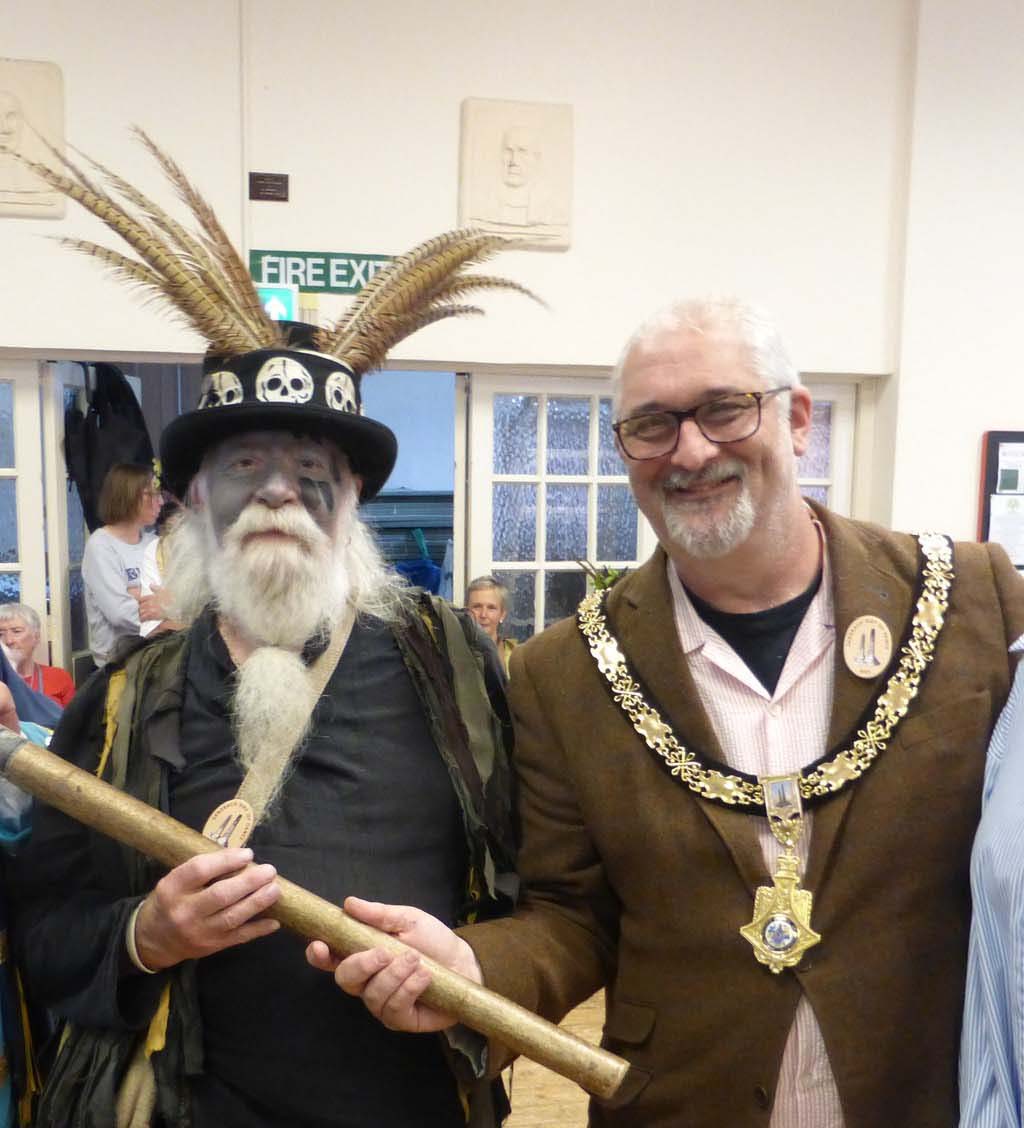
Photos that appeared on social media after the event, appeared to show dancers wearing blackface paint, but organisers later claimed it had been grey. The dancers said it was grey paint applied in bars, which had run and in photographs looked darker than it actually was.
Members of the town council voted eight in favour and five against of pulling the group’s funding.
The row attracted the attention of national media, with articles featured in the “Sun”, “Mirror” and “Daily Mail”.
Town Coun Sandrene Wright said the coverage had led to her, as the town’s only black councillor, being “dehumanised”, targeted with “abusive” online comments and death threats.
When asked how she felt about the Day of Dance returning to Sandbach, she said: “I don’t want to have anything to do with it.
“I became a target, but it wasn’t just about me. I had white people who have mixed-race children come to me embarrassed, asking how they would explain to their children why someone’s face was painted black.
“They felt it would be better coming from me. It was a horrible experience; I had to get the police involved.”
She explained that one resident had contacted her to say she was a “disgrace to the black community” because their relative of colour had not been offended by the performers.
“I look at Sandbach in a different way now. People need to understand the Equality Act,” she said.
Undeterred by the complaints and lack of support from the town council, Coun Nevitt, along with fellow organisers Coun Sandra Broad and Graham Whitehouse, who also helps to put on the town’s Pride event, managed to raise the funds needed to hold the event again this year.
Coun Nevitt explained that 12 morris sides will compete at locations around the town centre, including behind the market hall, at St Mary’s Church and on the cobbles.
She said: “We will follow the Morris Federation rules – as we did last year – which includes that there should be no full-face skin-toned face paint.
“That is followed to the letter by all sides. Any sides who do not do that would not be allowed to dance.”
She explained that The Witchmen, who sparked the initial controversy and went on to win the event, would not be coming to Sandbach this year.
She said: “They got so much publicity from what happened in Sandbach that they’re booked up all summer! They said they hope to come back next year.”
She added: “There isn’t a bad bone in any of the morris dancers. They are lovely people who enjoy what they do. They come from all over the country, without being paid expenses to do something they enjoy – surely there’s nothing wrong with that.”
Sandbach Day of Dance is on Saturday, 30th May, in the town centre from 10am.
• The English Folk Dance and Song Society said that many morris sides that blacked-up now did so because they believed it was a traditional part of morris and mummers’ play costume, saying it was related to disguise (performers did not want their employers to recognise them) or because it showed a dance’s connection to coal miners or chimney sweeps. “Contemporary performers do not see the origins of the dance as having any racist connotations and certainly do not intend to be offensive,” it said.
“References to morris sides or other customary practitioners blacking-up tend to proliferate from mid- to late-19th century. Because of this, and the use of certain instruments and tunes, many scholars link the addition of blackface in morris dancers’ costume to the influence of blackface minstrelsy. Minstrel shows and minstrel street performers were extremely popular and found a place in music hall, variety shows, carnivals and parades.”
Blackface minstrelsy continued as until the 1970s with shows such as “The Black and White Minstrel Show”, aired on BBC television.
“This stereotypical portrayal of black people is obviously now offensive to modern tastes,” said the society.
“Those dancers who continue to black-up are usually unaware of the influence from blackface minstrelsy, and so wish to continue the tradition. Regardless of the origin of blackface in morris or the intent of the dancers today, the fact is that blackface minstrelsy existed and was based clearly on racial stereotypes in the context of enslavement.
“Folk dancing does not take place in a cultural vacuum and to ignore the modern cultural context can be seen as offensive. Some sides explain to their audience the origins of blackface as disguise, while other sides have now chosen to perform with other colours of face paint or patterns that are more socially acceptable.”