
I once visited the Grand Canyon. It’s one of those places where words fail.
To the question “What’s it like?” one can only reply: “Big.”
Similarly, this album by Congleton guitar wizard Luke Machin defies description.
“What’s it like?”
“Epic.”
Reviewing an album by a local band is always tricky. There’s a sense of relief that it’s any good at all, and an understanding that writing great songs is hard — so even a decent album might lack those killer tunes that truly excite.
This one is the opposite: it’s a matter of reigning things in rather than going over the top and using expletives. Besides, “it’s ****g amazing” is not a review.
On first listen, it reminded me of Santana’s “Moonflower” — not so much for the Latin feel, but for the energy and joy of life, and the guitar of Carlos Santana (with whom Machin is on par).
Repeated plays — and I’ve played this at least once a day since I got it — reveal a musical blend of prog, soul, jazz, and neo-soul. I played some Erykah Badu (who coincidentally plays Manchester Apollo on Sunday), and there’s a connection between Badu’s lush, eccentric sound and this. Machin even includes a spoken clip that sounds like Jimi Hendrix.
Guest musicians include Francis Dunnery (It Bites, and toured with Robert Plant on “Fate of Nations”), Marco Minnemann (Joe Satriani’s drummer), and various prog luminaries. Everything about it is world-class.
“Frequency” opens the album with chilled synth and some Steve Hillage-style guitar noodling — Van Halen’s “Eruption” on Prozac — before segueing into “Energy,” which starts energetically but settles into mid-tempo soul, richly layered and complex.
The title track follows, a more traditional soul tune that wouldn’t be out of place on an Isley Brothers’ album (as would several others).
The sleeve notes seem to suggest that the Soulshine concept is about shedding life’s burdens and letting our souls shine. The song is suitably celebratory, growing more upbeat as it plays through.
A standout is perhaps “Parisian Rooftops” — slow and funky, and more Prince than anything. At 11 minutes, it’s the second-longest track and features a scat breakdown in the middle. Daniel Gildenlöw, multi-instrumentalist and singer for Pain of Salvation, takes the vocals. Machin drops a lovely guitar solo near the end.
This is followed by the slower “Blossom,” with blind singer Peter Jones (Camel, The Bardic Depths) on lead vocals, joined by Anastasia Pshokina from Ukraine.
The jazz-infused “Turn Around” picks up the pace again, featuring an impressive piano solo from Lalle Larson (keyboardist for Swedish symphonic band Karmakanic) and a slick organ solo from Andy Tillison (The Tangent).
At 12 minutes, it’s the proggiest track — though “Parisian Rooftops” edges it for me. Prog fan and columnist Mr Grumpy might disagree.
Closer “Final Boss” is exactly what the title suggests: everyone showing off. It’s a proggy jazz-funk instrumental — a little too funky for Rush, but the kind of thing they might do when letting loose. Think side two of “Hemispheres”. Minnemann shows why he holds the drum throne in Satriani’s band.
In the sleeve notes, Machin calls the album a labour of love — but “labour” undervalues the care and attention poured into it. Every second is exactly how it should be.
World-class musicianship, masterful songwriting — there’s nothing to do but stand back and think: “Epic.”
One for fans of prog, rock, soul, jazz, and fine musicianship.
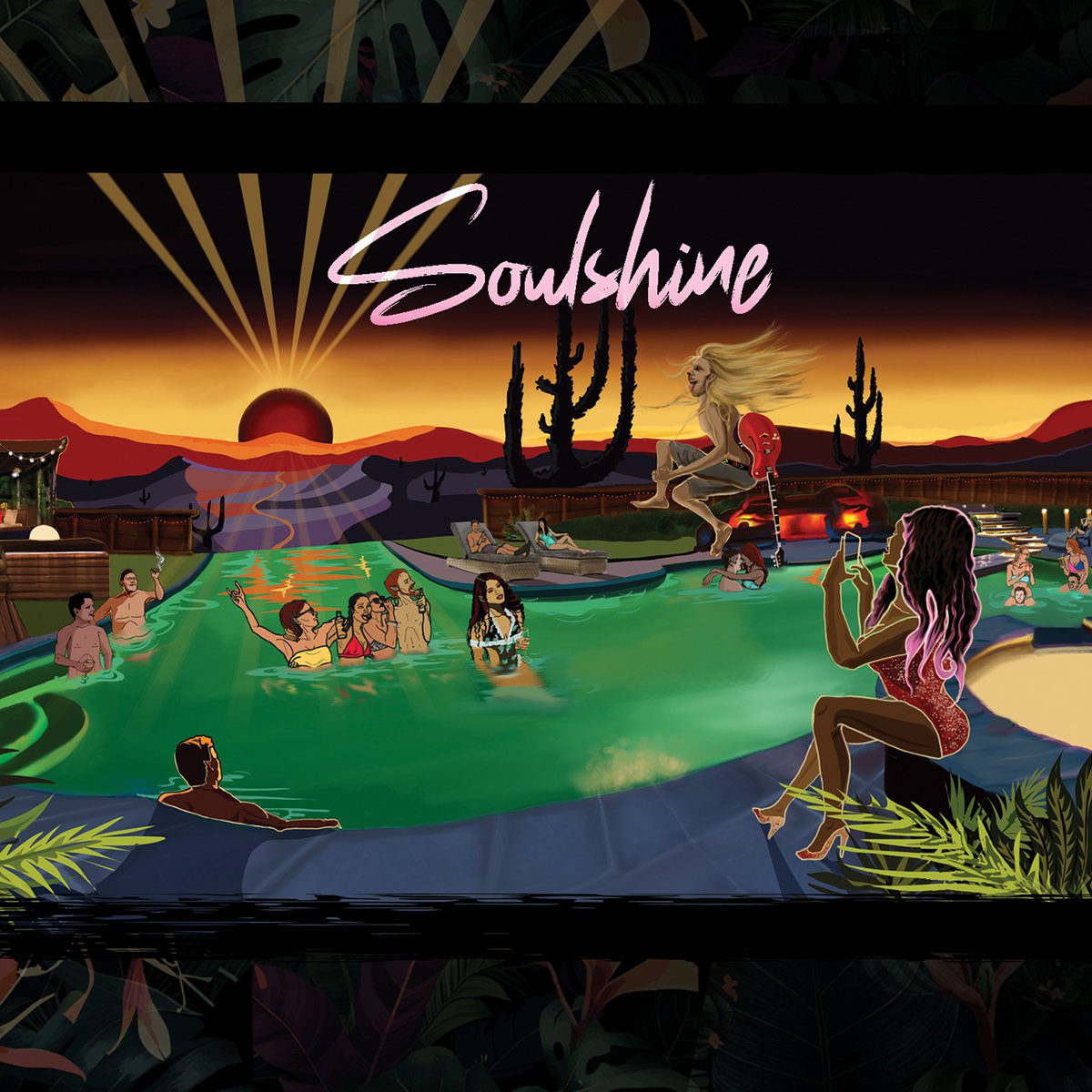
The artwork is by Sara Mirabbasi.
See the Bandcamp