
Many addresses on new housing developments are been given people’s names.
But how many residents who live there or pass by know of the people behind the names, or why they were given the distinguished honour of having a street named after them?
One, Claud Godwin Drive on an Alsager housing estate between Sainsbury’s and Crewe Road (Twyfords), is named after Alsager-born Claud Herbert Godwin, who had a decorated naval career during World War One, when he was honoured for preventing a British submarine from being captured by the enemy.
But when questioned by the “Chronicle” after we spotted the name on a planning application, Alsager councillors and the town’s branch of the Royal British Legion had not heard of him.
However, information about his life does appear on the “Lives of the First World War” page of the Imperial War Museum’s website.
Some of the other information below was sourced from the Ancestry website, courtesy of Sue Davies, clerk of Church Lawton Parish Council.
***
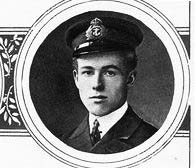
Claud Herbert Godwin was born on 3rd December 1887 and lived at Mere Lane, now part of Sandbach Road North, with his parents, Herbert and Mary Godwin.
He had two older siblings, George and Erin, and a younger sister, Gertrude.
He was baptised in 1888 at Christ Church, Alsager.
His father, a Cambridge University graduate, took holy orders and in 1902 became curate of Kidsgrove.
The Godwins must have had a penny or two because instead of going to school in Alsager, young Claud attended The Ryleys School in Alderley Edge.
His life on the high seas began in 1904 when he was enlisted to the training ship HMS “Britannia”, a King Edward VII-class pre-dreadnought battleship, according to Wikipedia, where he was a midshipman.
By 1911 he was a Royal Navy lieutenant on HMS “Astraea”. According to battleships-cruisers.co.uk that was the year she returned from Ceylon (Sri Lanka).
The ship was later recommissioned for the Cape of Good Hope and West Africa station in 1913, bombed Dar es Salaam in 1914 and blockaded the German cruiser Königsberg in the Rufiji Delta, Tanzania.
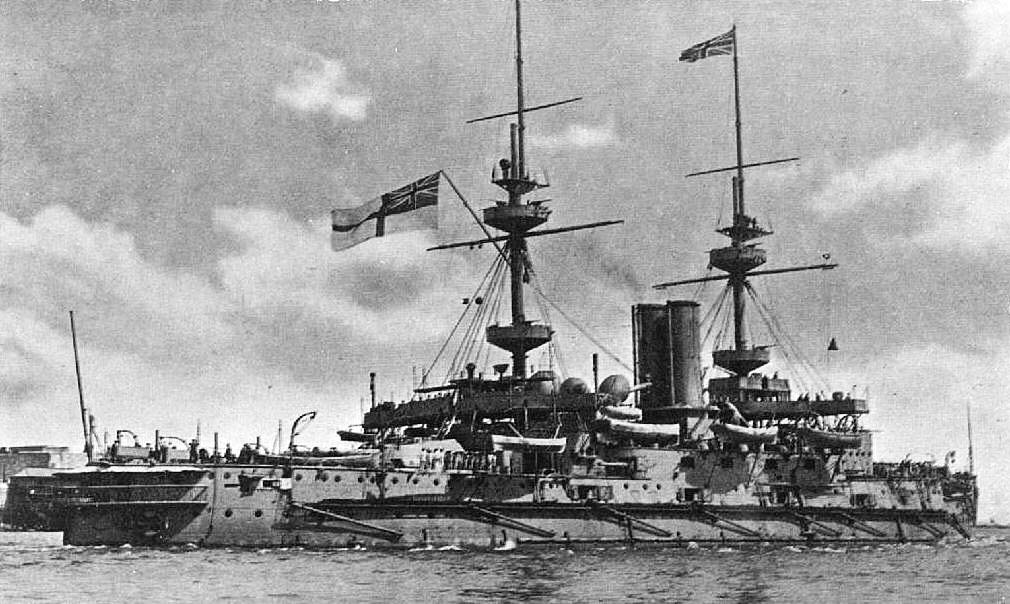
He was appointed as a torpedo officer on HMS “Majestic” in 1914, the year World War One began, and months later was in the thick of the Dardanelles campaign, when the allies tried unsuccessfully to overcome the Ottoman Empire in the Turkish Straits. Commissioned in 1895, she was the largest pre-dreadnought launched at the time.
It was off the Dardanelles in 1915 that he prevented an abandoned British submarine from being captured, for which he was awarded the Distinguished Service Order (DSO).
The “London Gazette” reported: “Lieutenant Claud Herbert Godwin commanded HMS “Majestic’s” picket boat (small naval craft) and was responsible for the successful shot by which the submarine E15 was destroyed after running aground.”
Wikipedia said the picket boat was itself sunk by Turkish shore batteries while returning.
HMS “Majestic” was later torpedoed by a German submarine while supporting troops ashore at Gallipoli, with the loss of 49 men.
By 1917 Lt Godwin had been promoted to the rank of Royal Navy Lt-Cdr.
The following year, he married Jean Forrester. By this time the Godwin family appeared to have moved south and the couple married on 6th June 1918 at St Peter’s Church in Ightham, Kent, with his father, the Rev Herbert Godwin, officiating.
The newspaper wedding announcement reported that Lt-Cdr Godwin was the younger son of the Rev and Mrs H Godwin, of Ivy Lodge, Ightham. The bride was from Leith in Scotland.
Lt-Cdr Godwin continued to climb the higher echelons of the Royal Navy and in 1919 was promoted to captain of HMS “Royal Oak”, later becoming commander.
The “Royal Oak” was one of five revenge-class battleships built for the Royal Navy during WWI. Wikipedia reports that she drew worldwide attention in 1928 for the “Royal Oak mutiny” when her senior officers were controversially court-martialled, an event that brought considerable embarrassment for what was then the world’s largest navy.
According to the Imperial War Museum’s “Lives of the First World War” webpage, Lt-Cdr Godwin retired in December 1933 but was recalled for WWII and in 1940-41 served on HMS “Springbank”, originally a cargo shop, that was converted into an “auxiliary anti-aircraft cruiser”. In 1941 she was torpedoed in the North Atlantic by a German submarine.
He was also awarded the 1914 Star WWI campaign/service medal, British War medal and Victory medal.
Lt-Cdr Godwin died on 16th November 1960 in Cattistock, Dorset.
Anyone with further information about him or his descendants can call the “Chronicle” office on 01260 273737 or email chronicleseries@aol.com.