
The North West Air Ambulance Charity has reported a £272,992 deficit for 2024/25, a sharp reversal from the £1.66 million surplus recorded the previous year.
The charity, which has a retail store in Congleton, said that rising demand, inflationary pressures and “major clinical developments” drove a double-digit increase in expenditure.
According to the charity’s annual report, total income fell slightly, dropping by 0.43% from £15.7 million to £15.6 million while total expenditure rose by 13.06%, climbing from £14.3 million to £16.1 million.
The charity’s annual report attributed the widening gap to a year of rapid service expansion, investment in new clinical capabilities and the rising cost of delivering emergency care across one of the largest regions in the country.
The charity said the increase in spending was “focused on increasing the impact of our service delivery”, with several major initiatives rolled out.
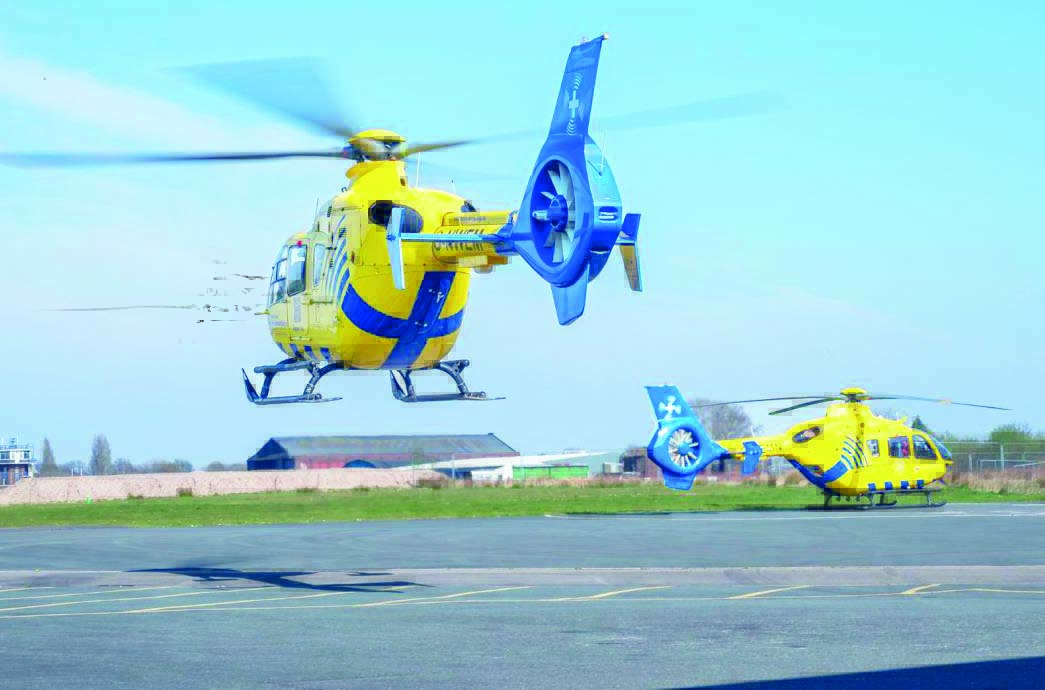
These included the introduction of blood-on-board across all aircraft and critical care vehicles, the expansion of the night car service from two to seven days a week, upgrades to the helicopter fleet, and investment in research, training and new clinical roles.
Inflation also played a part, alongside a rise in operational activity. The service responded to 3,371 call-outs, up from 3,168 the previous year — a 6.4% increase — and treated 1,652 patients, up 6.9% from 1,545. The number of blood transfusions delivered rose from 97 to 106, a 9.27% increase, and night-time patients treated surged from 150 to 277, an 84.6% rise.
The charity said its income streams remained steady. Donations and legacies totalled £6.64 million, including £3.1 million in legacy income. High-value giving contributed £724,000, while other trading activities generated £8.45 million.
The charity’s lottery continued to perform strongly, bringing in £5.91 million, with a higher surplus returned to the charity than in the previous year. Investment income rose to £524,000.
Said the report: “Retail operations were a particular bright spot.”
The charity reported its most successful trading year to date, with strong sales and “robust” Gift Aid returns.
It said it planned to open two new stores, including its first superstore, as part of a strategy to grow retail income and strengthen financial resilience.
Operating costs rose to £8.2 million, up from £7 million, while wages and salaries totalled £3.1 million. The charity employs 106 staff, including 41 in fundraising, 14 in administration and 51 in commercial roles.
Investment
The report highlighted the charity’s investment in clinical capability.
Critical care paramedics had undergone extensive training to deliver blood transfusions without a doctor present, and the charity now works closely with Greater Manchester Blood Bikes and North West Blood Bikes Lancashire and Lakes, who made daily deliveries to its bases.
Since 2019, more than 450 patients have received blood transfusions from the service.
The expansion of the night car service — now operating seven nights a week from 6pm to 2am — had also increased capacity to “deliver advanced interventions during high-risk hours”.
“Resourced by a doctor and a critical care paramedic or two critical care paramedics, the service offers advanced medical interventions, aiming to improve outcomes for patients,” said the report.
The charity said it continued to rely heavily on its volunteer network. As of 31st March 2025, it had 539 active volunteers, a 6.7% increase on the previous year.
Volunteers contributed 58,756 hours of retail support and 3,436 hours of fundraising support.
A new volunteer management system, Volunteero, was introduced in April 2024 following a major donation. The platform allows volunteers to track hours, access opportunities and provide feedback, and has contributed to improved retention and engagement.
The charity received 20 complaints during the year — 18 relating to fundraising and retail, and two relating to operations.
Charity chair Kim Spencer said the year demonstrated the charity’s commitment to “delivering high-quality pre-hospital care across a region of more than eight million people”.
She wrote: “We attended over 3,300 missions across our region, delivering enhanced pre-hospital care to people in the most difficult and unexpected of circumstances.
“Blood is now on board all of our aircraft and critical care vehicles, our night car service is available every night of the week, and we’ve upgraded and future-proofed our helicopters.” She added that none of the charity’s work would be possible without the support of communities across the North West.
The charity’s income is supported by two subsidiary organisations: North West Air Ambulance Promotions Limited, which operates its retail shops, and the Friends of the North West Air Ambulance Lottery CIC, which runs the charity’s lottery.